


Market Orders vs Limit Orders: Which Should You Use?
Every time you place a trade, you face a choice most beginners breeze right past: market order or limit order? It sounds minor, but knowing the difference between market orders vs limit orders can separate getting the price you wanted from watching your entry slip away in real time.
Behind that “buy” or “sell” button on your trading platform sits a decision about how your order gets filled, at what price, and how much control you actually hold over the outcome. If you’ve ever placed a trade and noticed the fill price was off from what you saw on screen, you’ve already felt why this matters.
This article breaks down both order types with real scenarios and concrete numbers, so you walk away knowing exactly which one to pick, and why, every single time.
This content is for educational purposes and does not constitute financial advice.
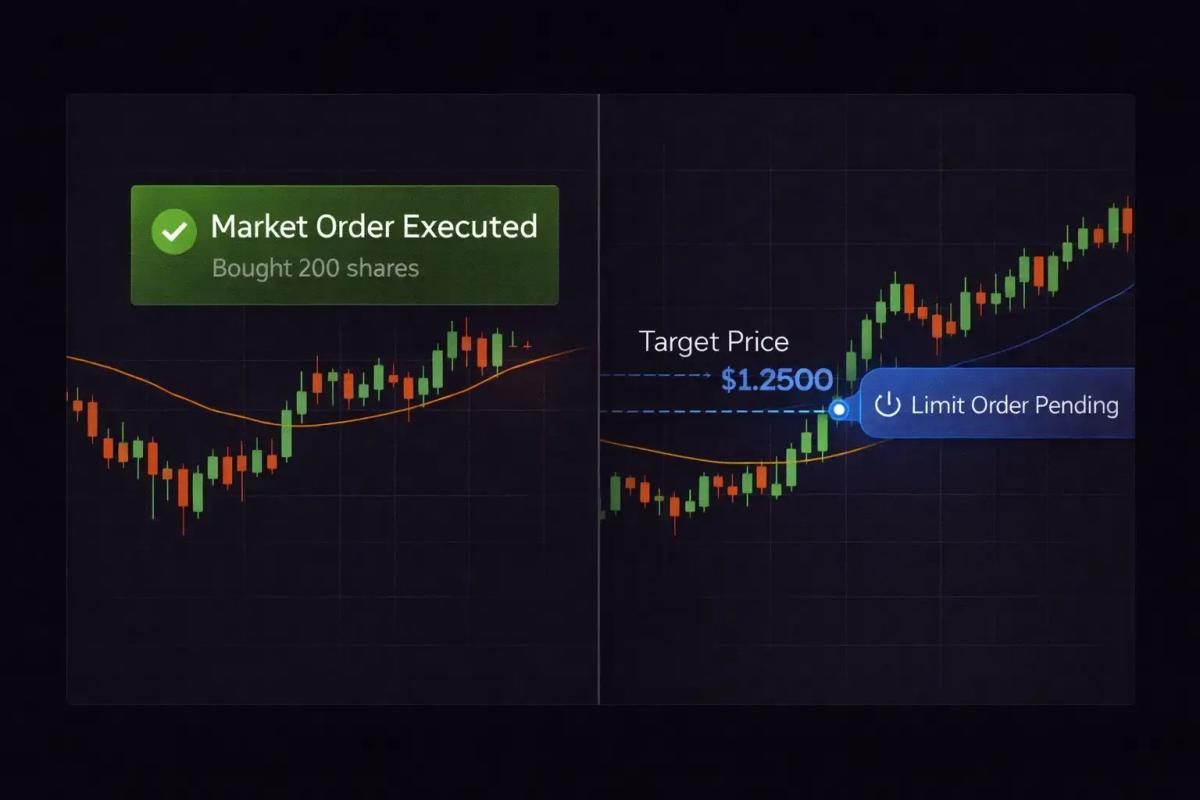
What Is a Market Order?
Think of a market order like walking into a store and grabbing an item off the shelf at whatever price is tagged. You want it now, and you’ll pay the current asking price to get it.
A market order tells your broker to buy or sell an asset immediately at the best available price. Speed is the priority, not price precision.
How Market Orders Execute
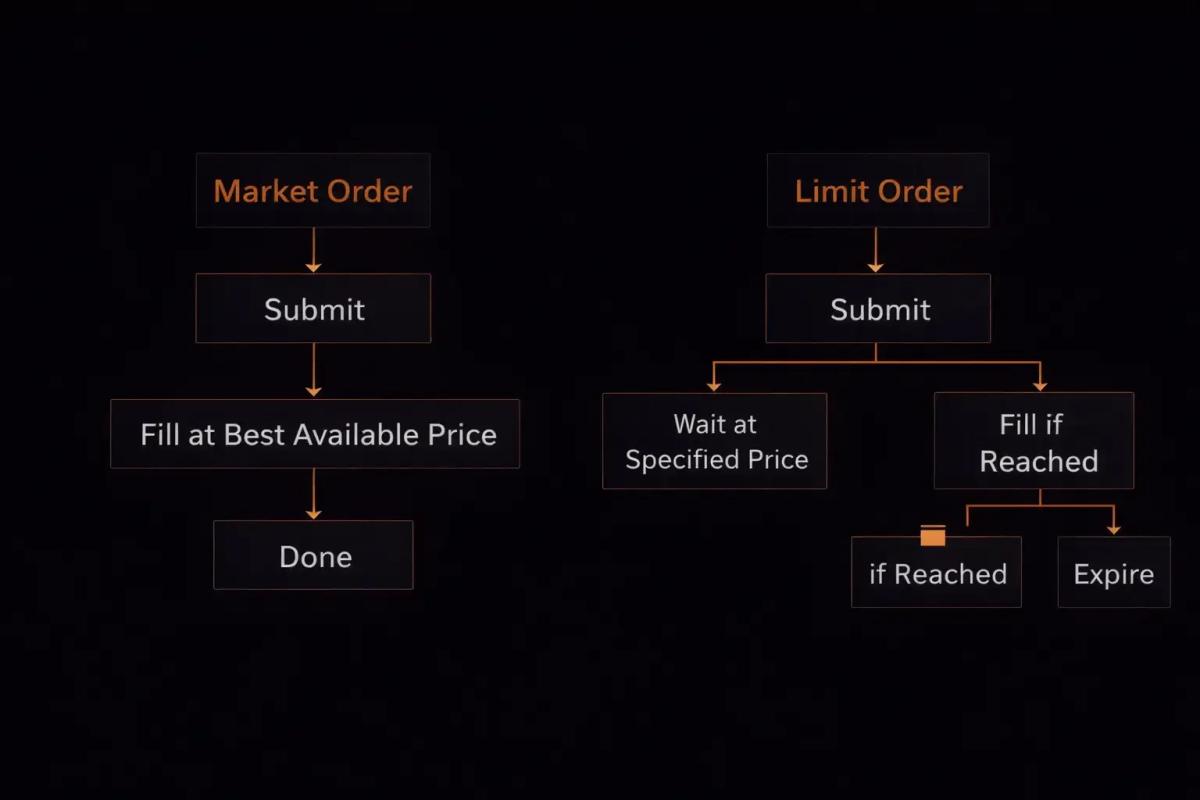
When you submit a market order, your broker routes it to the market and matches it against the best available price on the opposite side of the order book. For buying, you get filled at the lowest ask. For selling, your order fills at the highest bid.
The process works like this:
- You click “buy” or “sell” with a market order selected
- Your broker sends the order to the exchange or market
- The order matches against the best available price on the opposite side
- Your trade fills almost instantly
- You receive a confirmation with your actual fill price
The key detail is that fill price might not match the exact number on your screen when you clicked. In fast-moving markets, the price can shift in the milliseconds between your click and your order reaching the exchange. This gap is called slippage, and it’s the central trade-off you accept with market orders.
When Market Orders Work Best
Market orders shine when getting into or out of a position quickly matters more than nailing the perfect price. These are the situations where they make the most sense:
- High-liquidity assets: When you’re trading something heavily traded, like major stock indices or large-cap stocks, the bid-ask spread stays tight and slippage is minimal. Your fill price will likely land very close to what you saw on screen.
- Urgent exits: If a trade is moving against you and you need out now, a market order pulls you out immediately instead of leaving you waiting and hoping.
- Small position sizes: When you’re trading a small number of shares or a modest position, the cost difference from slight slippage is negligible.
In short, market orders belong in situations where time matters more than a few cents per share.
But speed has a cost, and that cost becomes very real when conditions turn rough. So what happens when you need tighter control over your price?
What Is a Limit Order?
If a market order is grabbing something off the shelf at sticker price, a limit order is closer to placing a bid at an auction. You’re saying: “I’ll buy, but only at this price or better.” If the market doesn’t meet your terms, the trade simply doesn’t happen.
A limit order instructs your broker to buy or sell an asset only at a specific price you set, or a more favorable one. You’re trading speed for price control.
How Limit Orders Execute
When you place a limit order, it sits on the order book and waits. It only fills if and when the market price reaches your specified level.
For a buy limit order, you set a price below the current market price. Your order fills only if the price drops to your level or lower. For a sell limit order, you set a price above the current market price. Your order fills only if the price rises to your level or higher.
Say a stock is trading at $50.00 and you want to buy it, but you believe $48.50 is a fairer entry. You place a buy limit order at $48.50. If the stock dips to that level, your order fills. If it never drops that low, your order sits unfilled and eventually expires based on the time frame you chose (day order, good-til-canceled, etc.).
The trade-off is straightforward: you gain price certainty, but you give up guaranteed execution.
When Limit Orders Work Best
Limit orders give you an edge in situations where patience pays off:
- Volatile markets: During earnings announcements, news events, or periods of sharp volatility, prices can swing hard. A limit order protects you from buying at an inflated spike or selling at a temporary dip.
- Low-liquidity assets: When trading thinly traded stocks, crypto pairs, or less popular instruments, the bid-ask spread can widen considerably. A limit order keeps you from getting filled at a price far from what you intended.
- Planned entries and exits: If you’ve done your analysis and pinpointed a specific price level for your entry or exit, a limit order lets you set it and walk away.
- Larger positions: When you’re trading bigger size, even small price differences compound. Limit orders help you manage your average entry or exit price with more precision.
You get the precision, but there’s a real possibility your order never fills. That’s a risk worth weighing before you commit.
Now that you understand both types on their own, how do they actually compare when placed side by side?
Market Orders vs Limit Orders: Key Differences
Choosing between these two order types isn’t about which one is “better.” It’s about which one fits your specific situation right now. Here’s how they stack up across the dimensions that actually affect your trades.
Execution Speed vs Price Control
This is the core tension. Market orders prioritize speed. Limit orders prioritize price.
When you need to act fast, a market order delivers. When you need to control your cost, a limit order protects you. Neither is inherently better than the other, it depends on the context.
Cost and Slippage Considerations
Slippage is the gap between the price you expected and the price you actually received. With market orders, slippage is always a possibility, and it grows under certain conditions:
- Low liquidity: Fewer buyers and sellers mean wider gaps between available prices, so your order might fill at a noticeably different level.
- High volatility: Rapid price movement means the best available price shifts between the moment you click and the moment your order executes.
- Large order sizes: A big market order can “eat through” multiple price levels on the order book, pulling your average fill price further from the top-of-book quote.
Limit orders essentially protect you against slippage because you define the maximum (or minimum) price you’re willing to accept. But if the market never reaches your price, you pay a different kind of cost: the missed opportunity.
The question is whether you’d rather risk a slightly worse fill or risk missing the trade altogether.
Risk Profile of Each Order Type
Every order type carries risk.
Market order risks include getting filled at a worse price than expected (slippage), overpaying during sudden price spikes, and in extreme low-liquidity situations, receiving a fill that’s significantly off from the quoted price.
Limit order risks include your order never executing if the price doesn’t reach your level, missing a trade that moves in your expected direction without triggering your fill, and partial fills where only a portion of your order executes because volume at your price was insufficient.
Understanding these risk profiles lets you make a deliberate choice rather than a default one. That deliberate choice is exactly what separates traders who feel in control from those who feel at the mercy of the market.
How to Choose the Right Order Type for Your Trade
Knowing the theory is useful. Applying it in the moment, when you’re staring at your platform and the price is moving, is where it counts. Let’s make this practical.
Scenario-Based Decision Guide
Scenario 1: You want to buy shares of a large-cap stock during normal market hours. The stock is highly liquid, the bid-ask spread is tight (maybe a cent or two), and you just want in. A market order works perfectly here. Slippage will be minimal, and you’ll get filled almost instantly.
Scenario 2: A biotech stock just announced trial results and the price is swinging 5% in either direction every few minutes. This is exactly when a market order can hurt you. You might see $42.00 on screen and get filled at $43.80. Use a limit order to define your maximum acceptable entry price and protect yourself from chasing a spike.
Scenario 3: You’ve analyzed a forex pair and identified a support level where you want to enter a long position. You’re not in a rush. You have a specific price in mind based on your analysis. Set a buy limit order at your target level and let the market come to you.
Scenario 4: Your position is down and you need to exit immediately to limit losses. Speed matters more than price perfection. A market order gets you out now. Waiting for a specific exit price with a limit order risks the position sliding even further against you.
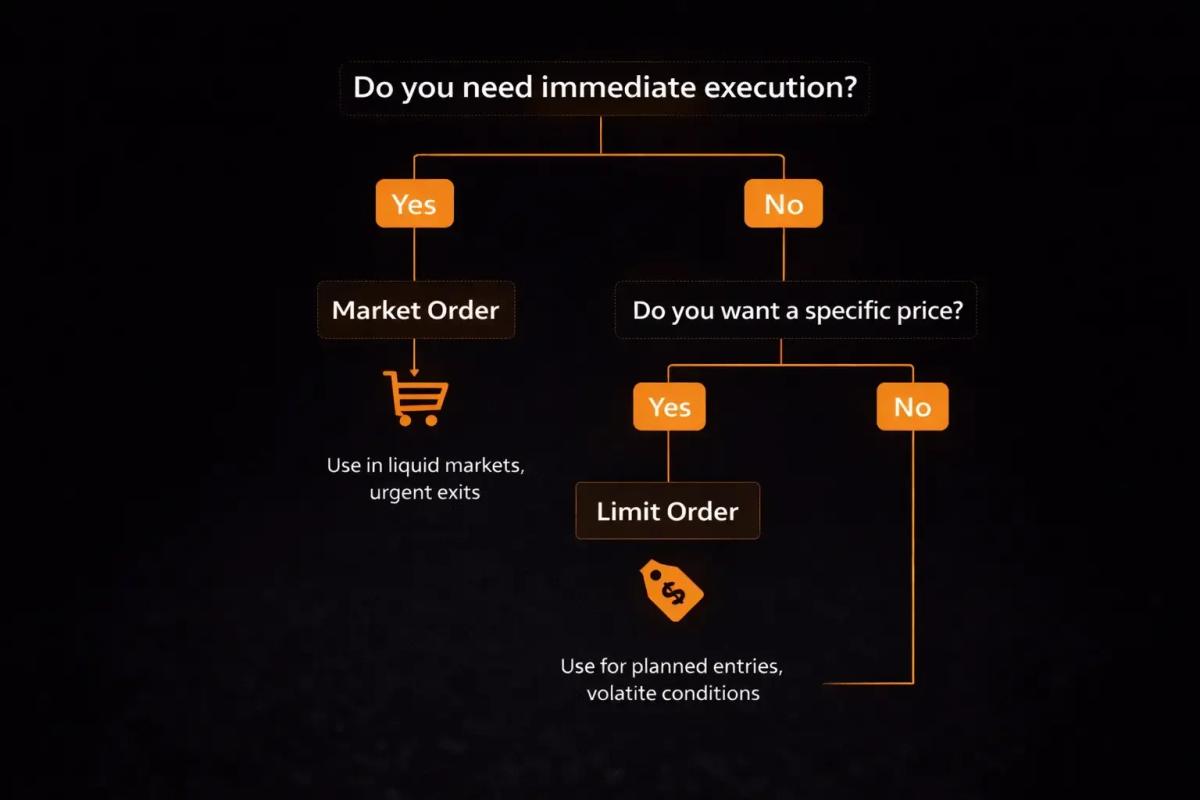
Ask yourself two questions before every trade:
- Do I need to be in (or out of) this trade right now?
- Is there a specific price that matters more than speed?
If the answer to question one is yes, lean toward a market order. If the answer to question two is yes, lean toward a limit order.
Common Mistakes Beginners Make with Order Types
Understanding order types is one thing. Sidestepping the traps that catch nearly every new trader is another. These are the mistakes that cost beginners real money:
- Using market orders during major news events. Earnings releases, economic data drops, and geopolitical headlines create sudden liquidity gaps and price jumps. Placing a market order in those moments is like buying blindfolded. The fill price can land shockingly far from what you expected.
- Setting limit order prices too aggressively. If a stock is at $100 and you place a buy limit at $92, you might feel clever, but you’ll likely watch the stock climb without you. Effective limit prices are grounded in recent price action and support/resistance levels, not wishful thinking.
- Defaulting to market orders without thinking. Many platforms have “market order” pre-selected. Beginners often click through without pausing to consider whether a limit order would serve them better. Make the choice consciously every time.
- Forgetting about order expiration. Limit orders don’t sit there indefinitely (unless you specifically choose good-til-canceled). Day orders expire at market close. If you forget this, you might assume your order is still active when it’s already been canceled.
- Ignoring the bid-ask spread. Before placing a market order, glance at the spread. If it’s unusually wide, that’s a signal that liquidity is thin and slippage risk is elevated. That might be your cue to switch to a limit order instead.
As you progress, you’ll also encounter related order types like stop orders and stop-limit orders, which blend elements of both market and limit orders for risk management purposes. Mastering these two core types first gives you the foundation everything else builds on.
Frequently Asked Questions
Is a limit order guaranteed to execute?
No. A limit order only fills if the market price reaches your specified level. If the price never gets there, your order stays unfilled and eventually expires. This is the fundamental trade-off: you get price control, but not execution certainty.
Will a market order always fill at the price I see on screen?
Not necessarily. The price on your screen is a snapshot of the most recent trade or quote, but by the time your market order reaches the exchange, the price may have shifted. This difference is called slippage, and it tends to be more pronounced in fast-moving or low-liquidity conditions.
Which order type is better for beginners?
Neither is universally better. That said, beginners often benefit from using limit orders more frequently because they force you to decide on a price before you commit. This builds a habit of intentional trading rather than reactive clicking. There are still plenty of situations where a market order is the right call.
Can I cancel or change an order after I've placed it?
For limit orders that haven't filled yet, yes. You can typically cancel or modify them through your trading platform. Market orders, on the other hand, execute almost instantly in liquid markets, so there's usually no window to cancel. If your limit order has been partially filled, you can generally cancel the remaining unfilled portion.
How does the bid-ask spread affect my market order fill price?
When you place a market buy order, you'll be filled at the ask price (the lowest price sellers are currently offering). When you place a market sell order, you'll be filled at the bid price (the highest price buyers are currently offering). The gap between these two is the bid-ask spread, and it represents an immediate, built-in cost on your trade. Wider spreads mean higher costs, which is why checking the spread before placing a market order is a worthwhile habit.
About the authors


Related articles
How Much Do Forex Traders Actually Make? A Realistic Income Breakdown
A realistic, data-grounded breakdown of forex trader income across four trader types, from part-time retail to institutional, including what account size actually means for your earnings.
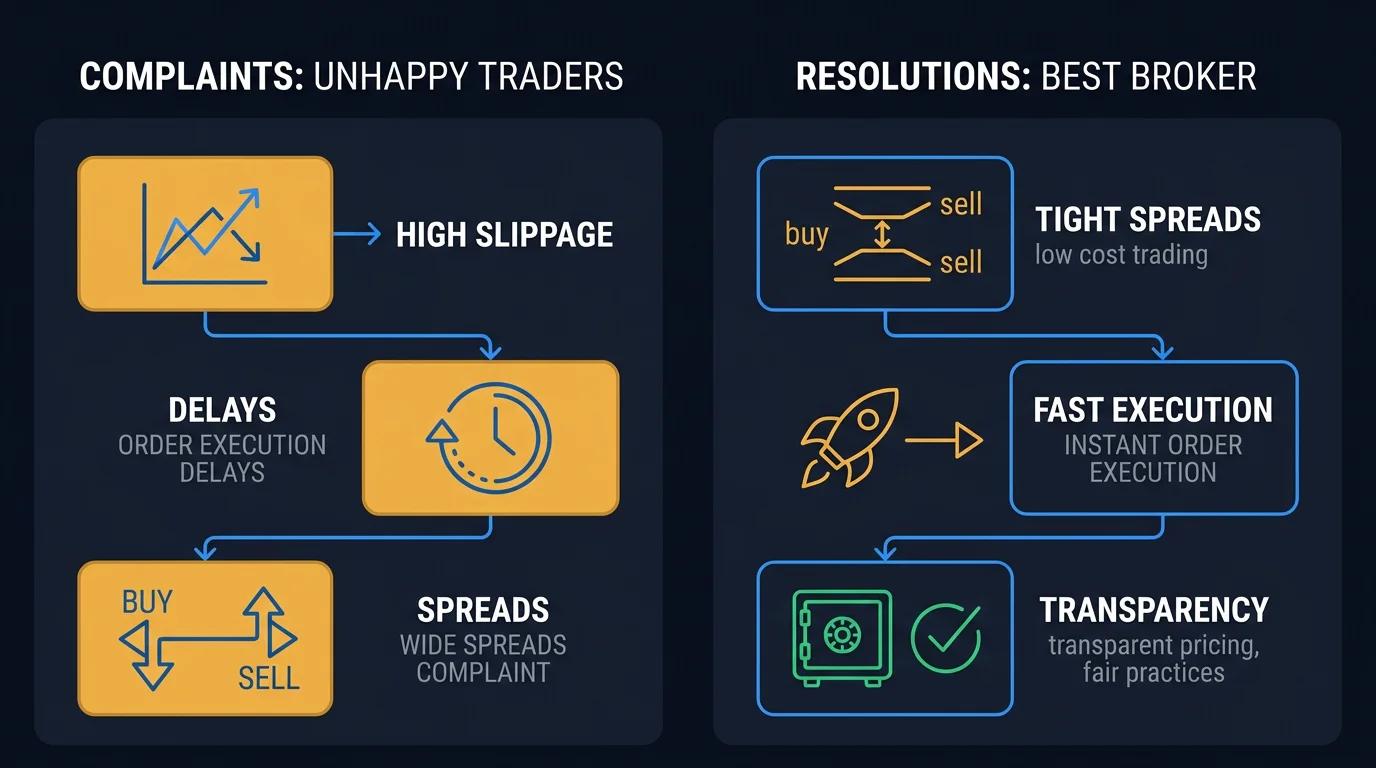
Which Forex Brokers Have the Most Complaints? What Regulatory Records Actually Show
Learn how to check forex broker complaint records across FCA, ASIC, NFA, and CySEC databases; and what those records actually tell you before you open an account.
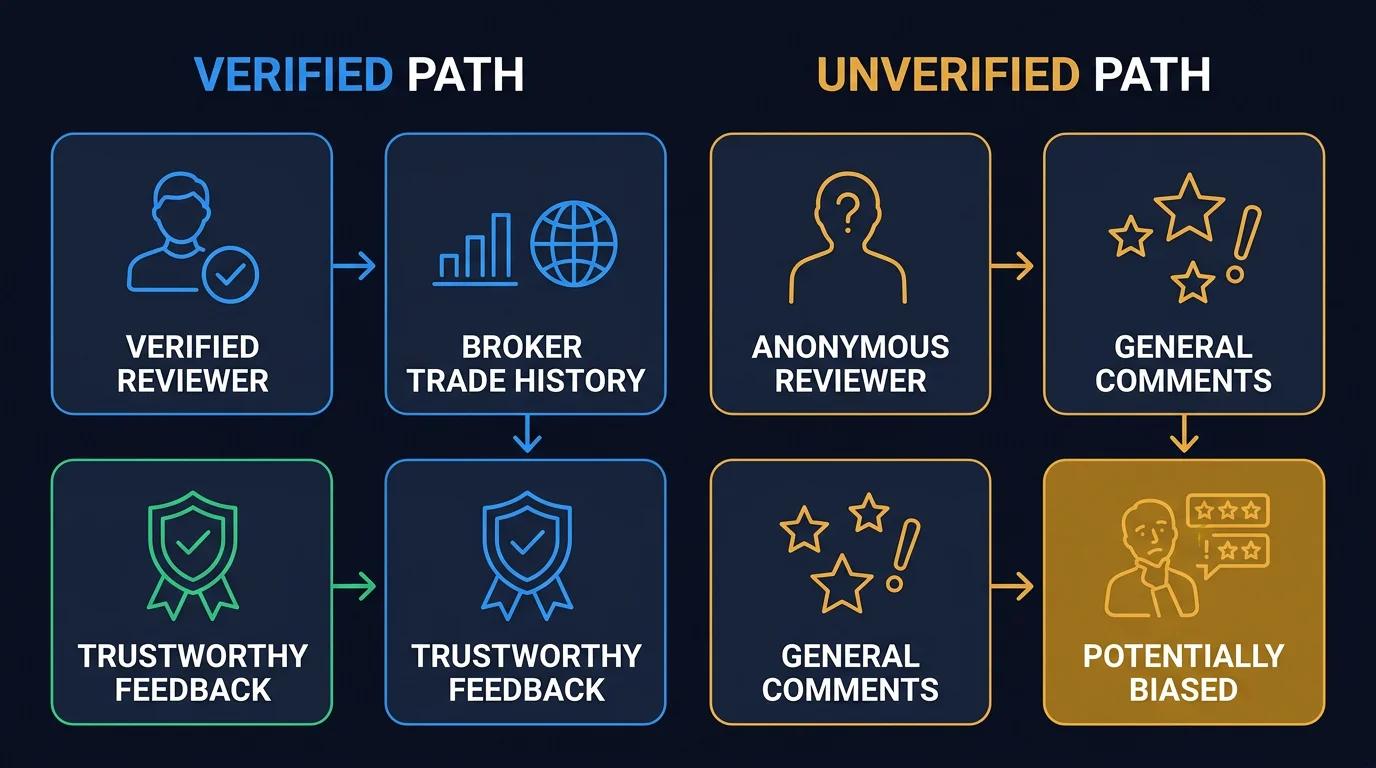
Verified vs Unverified Forex Broker Reviews: What the Difference Actually Means
What "verified" actually means on broker review platforms, how to spot fake review campaigns, and how to build a credibility framework that surfaces genuine signal before you open an account.
0 comments