


How to Calculate the Real Cost of a Forex Trade Across Different Brokers
Forex trading cost calculation is not as simple as checking the spread on your broker’s website. The real cost of every trade combines spread, commission, and swap, and if you are only tracking one of those, you are working with an incomplete picture.
This guide gives you the formulas and frameworks to calculate the true all-in cost of any forex trade, across any broker, regardless of how they structure their fees. If you are still deciding where to trade, a broker comparison tool can help you apply this framework to real options.
Why Your Broker’s Headline Fee Is Not the Full Picture
Most brokers lead with their most attractive number: a tight spread, a zero-commission banner, or a low overnight rate. What they rarely show you is how those numbers interact, or what the combined effect looks like on your actual P&L.
Knowing your full cost before you trade is what separates informed decisions from expensive guesses.
The Three Cost Components Every Trader Needs to Account For
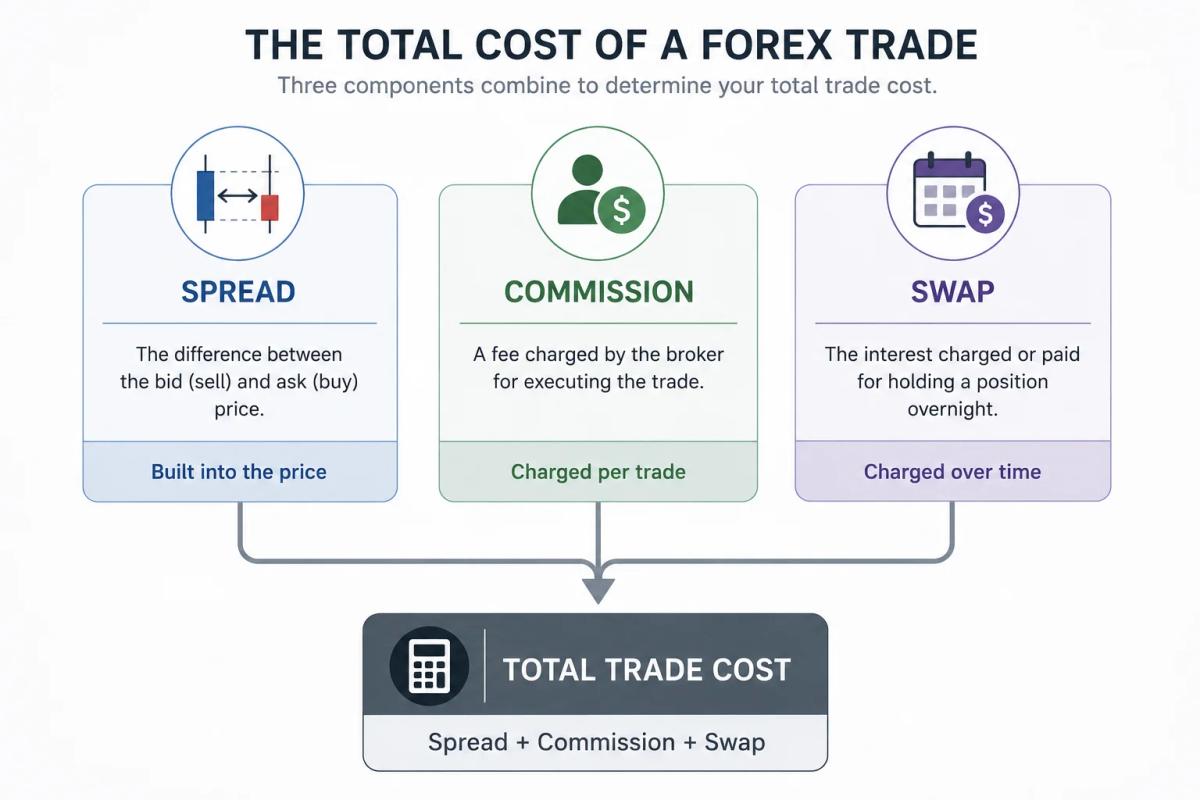
Every forex trade carries up to three distinct cost layers:
- Spread cost – the difference between the bid and ask price at execution, paid on every trade regardless of how long you hold
- Commission – a fixed or percentage-based fee charged by the broker, typically per lot and per side, meaning you pay twice: once to open, once to close
- Swap (overnight/rollover fee) – a charge or credit applied to any position held past the daily rollover cutoff, usually 5pm New York time
Not all three apply in every situation. Swap only applies if you hold overnight. Commission only applies on certain account types. But the method for calculating each one, and combining them into a single comparable figure, is something every active trader should have ready to use.
Why Zero-Commission Accounts Are Not Always Cheaper
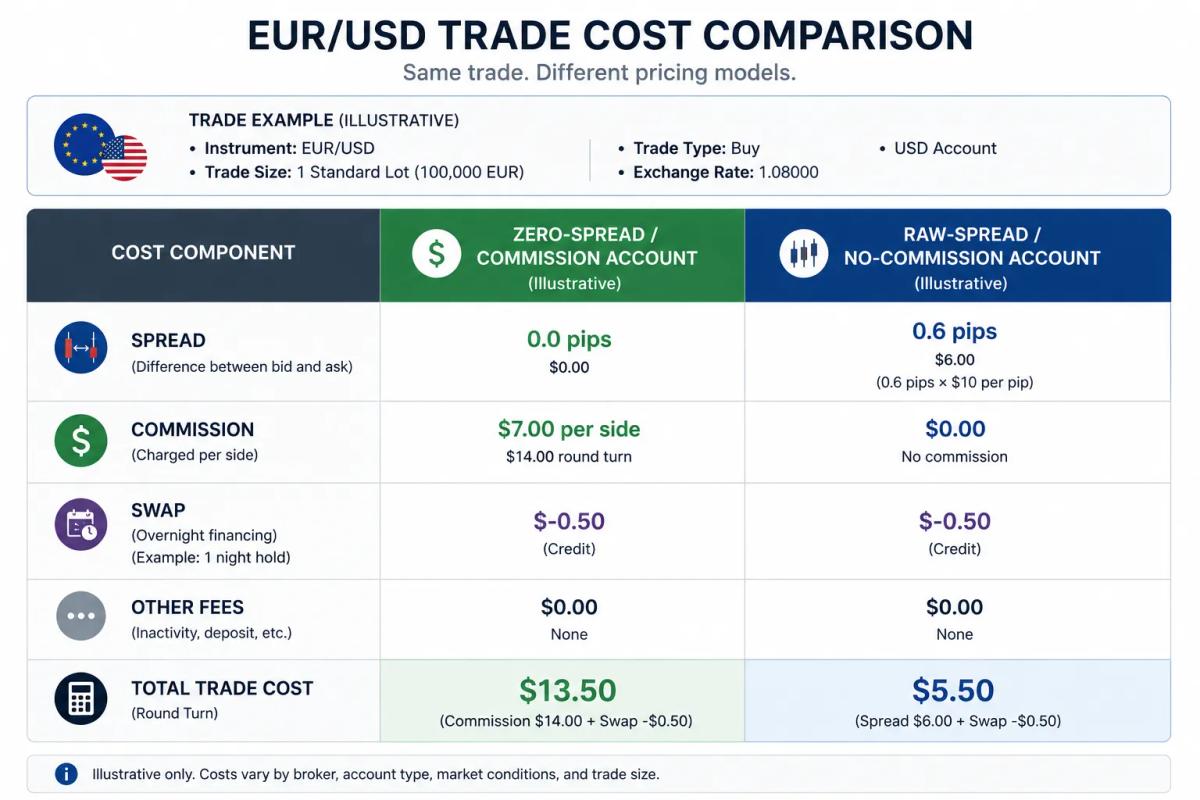
Zero-commission accounts still have a cost. Brokers offering this structure typically widen their spread to compensate. A broker charging no commission but quoting a 2.0 pip spread on EUR/USD is embedding their revenue directly into the price you trade at.
A raw-spread account with a $7 round-trip commission and a 0.1 pip spread can easily be cheaper per trade, depending on your lot size and trading frequency. The only way to know which is actually cheaper is to run the math, which is exactly what this guide covers.
Component 1 – Calculating Spread Cost in Real Terms
Spread looks small in pips, but it scales fast with position size. Here is how to convert it into a real dollar figure.
Converting Spread to a Dollar (or Base Currency) Value
The formula for spread cost is:
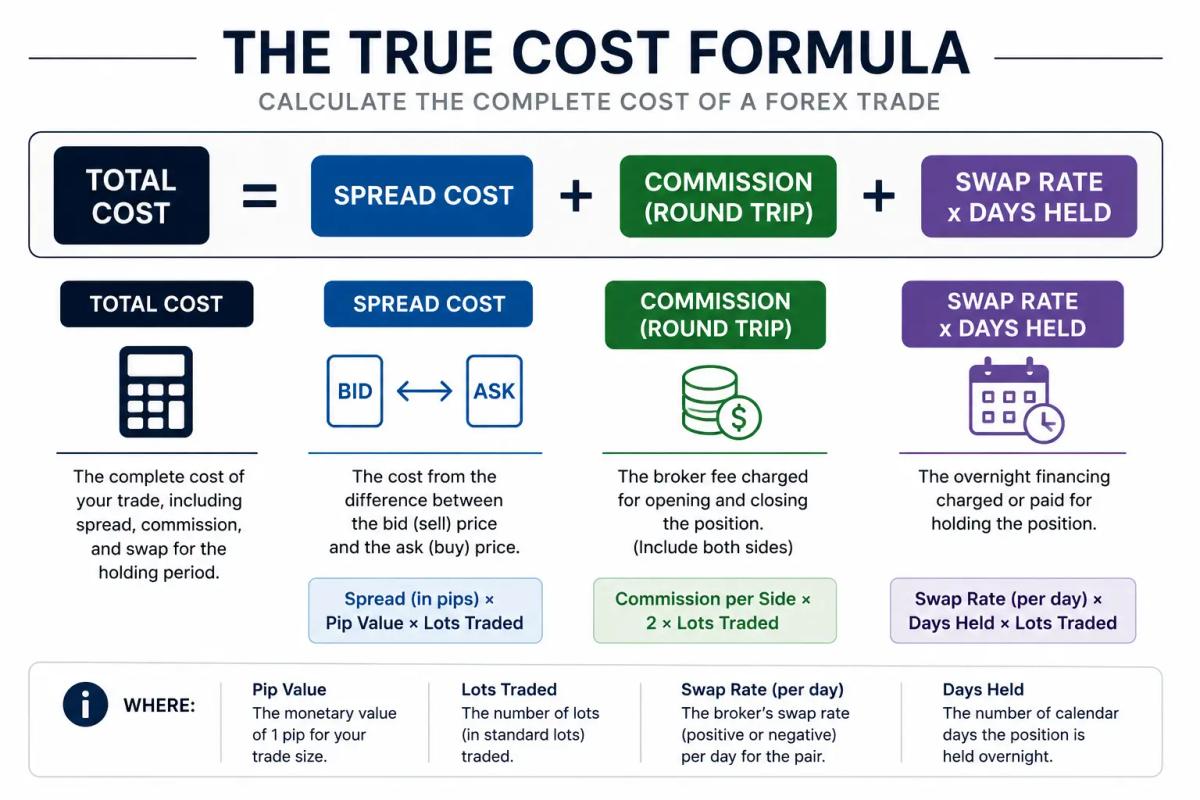
Spread Cost = Spread (in pips) x Pip Value x Number of Lots
Pip value for most major pairs quoted against USD (for example, EUR/USD or GBP/USD) is $10 per standard lot. For pairs where USD is the base currency (for example, USD/JPY), pip value varies and needs to be calculated separately. A pip value and lot size explainer covers that in detail.
Illustrative example (figures are for illustration only; verify current rates with your broker):
Spread Cost = 1.5 x $10 x 1 = $15
That $15 is the cost you absorb the moment your trade opens. Every trade starts with that deficit already on the board.
How Spread Varies by Account Type and Market Conditions
Spreads are not fixed. Most brokers quote variable spreads that widen and narrow based on:
- Liquidity conditions – spreads widen during low-volume periods (the Asian session on some pairs, around major news events)
- Account type – ECN/STP accounts typically offer tighter raw spreads; standard accounts carry wider built-in spreads
- Instrument – major pairs carry tighter spreads than minors or exotics
When comparing brokers, always use the typical spread (the broker’s stated average under normal market conditions).
Component 2 – Commission Cost Per Trade and Per Round Trip
Commission is the most straightforward of the three costs to calculate; it is usually a fixed number. The key is knowing whether your broker quotes a per-side or per-round-trip figure, because those represent very different things.
Fixed vs Percentage-Based Commission Structures
Most forex brokers use one of two commission structures:
- Fixed per lot – a set dollar amount per standard lot (for example, $3.50 per side, equalling $7.00 round trip)
- Percentage of notional value – a percentage of the total trade value (less common in retail forex, more typical in institutional contexts)
The per-lot structure is simpler to work with. Always confirm whether the figure your broker quotes is per side or round trip. A broker advertising “$3.50 commission” may mean $3.50 per side, which means $7.00 total across the trade lifecycle.
How to Normalise Commission to a Per-Pip or Per-Lot Equivalent
To compare commission against spread on equal footing, convert it to a pip equivalent:
Commission in Pips = Commission (round trip, $) / Pip Value
Using the same EUR/USD example:
Commission in Pips = $7.00 / $10 = 0.7 pips
A broker charging $7 round-trip commission is adding 0.7 pips of effective cost on top of whatever their spread is. A raw-spread account at 0.1 pip spread plus $7 commission has an effective spread of 0.8 pips total, almost certainly tighter than a zero-commission account at 1.8 pips or wider.
That comparison is how you cut through the headline numbers.
Component 3 – Swap Fees and How to Annualise Them
Swap is the cost most traders underestimate. Applied overnight, it looks negligible in isolation; held over days or weeks, it compounds into a meaningful drag on performance.
How Swap Is Calculated Per Night
Swap reflects the interest rate differential between the two currencies in a pair, adjusted for your broker’s handling fee. The per-night formula is:
Daily Swap Cost = Swap Rate (in pips or points) x Pip Value x Number of Lots
If your broker expresses swap in currency units per lot:
Daily Swap Cost = Swap Rate ($/lot) x Number of Lots
Illustrative example (figures are for illustration only):
Daily Swap = 0.5 x $10 x 1 = $5 per night
Hold that trade for five days and swap cost reaches $25. The spread cost on entry was $15. Swap has just exceeded your entry cost, and the trade is still open.
Swap rates change frequently, sometimes daily. Always check your broker’s current swap schedule rather than relying on historical figures.
Converting Nightly Swap Into an Annualised Rate for Fair Comparison
To compare swap across brokers on equal footing, convert it to an annualised percentage of notional trade value:
Annualised Swap Rate = (Daily Swap / Notional Trade Value) x 365 x 100
Using the example above:
Annualised Rate = ($5 / $109,000) x 365 x 100 = approximately 1.67% per annum
Expressed this way, swap becomes a real financing cost, directly comparable to any other borrowing rate and much harder to dismiss as negligible. Framing it as an annualised percentage also makes broker-to-broker comparisons far more meaningful than raw pip figures.
Combining All Three: The True Cost Formula
Here is where the three components come together into one number you can actually use.
Step-by-Step Worked Calculation (Single Trade)
Scenario (all figures are illustrative; verify current rates directly with your broker):
Step 1 – Spread Cost 0.2 x $10 x 1 = $2.00
Step 2 – Commission $7.00 (round trip, already per lot)
Step 3 – Swap Cost $5.00 x 3 = $15.00
Step 4 – Total Cost $2.00 + $7.00 + $15.00 = $24.00
For a trade held for three nights on EUR/USD, the real cost is $24 per lot. Not $7. Not $2. $24.
How to Express Total Cost as a Percentage of Trade Value
Total Cost % = (Total Cost / Notional Trade Value) x 100
Total Cost % = ($24 / $109,000) x 100 = approximately 0.022%
Small as a percentage, but meaningful when multiplied across frequent trades or larger position sizes. At 10 lots and 20 trades per month, that figure becomes $4,800 per month in real cost.
Applying the Formula Across Different Broker Types
The numbers change depending on who you trade with. Running the formula across two structurally different broker types shows how much the fee architecture matters.
If you want to see how real brokers stack up on these inputs, a broker comparison gives you a starting point for those calculations.
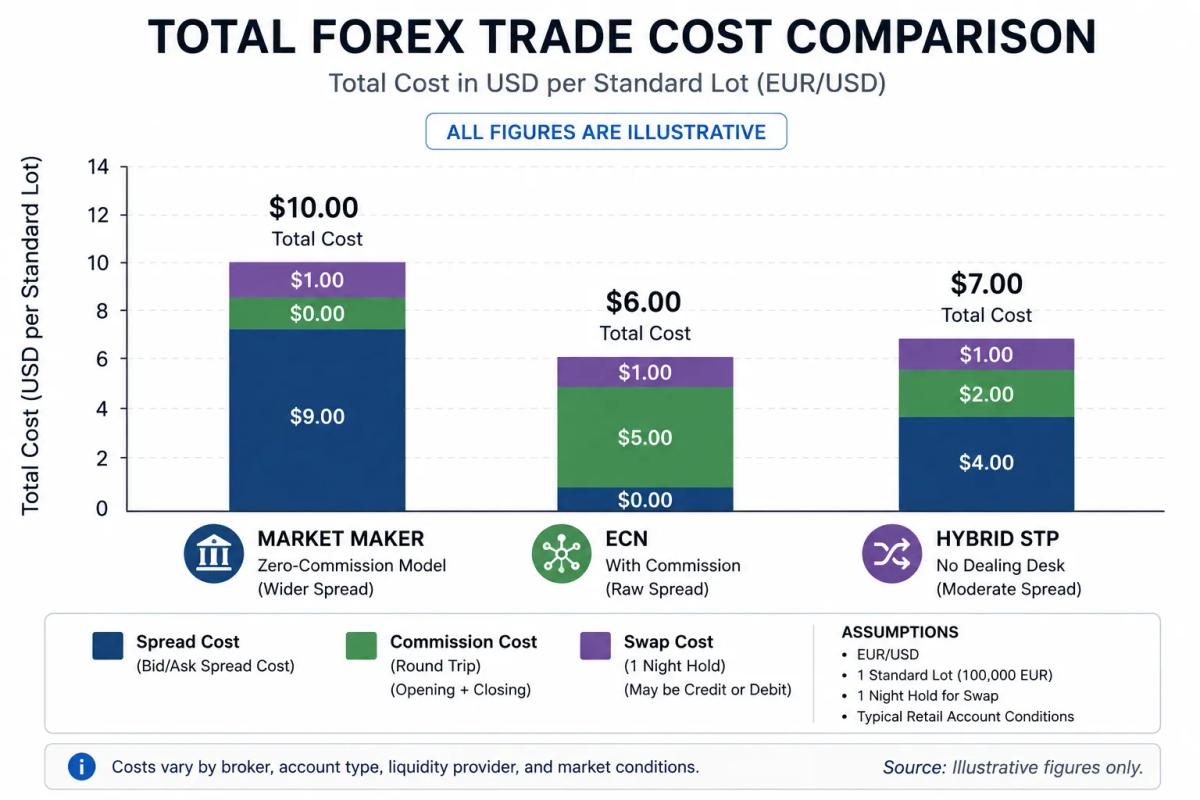
Market Maker vs ECN/STP: What the Math Actually Shows
In this illustrative scenario, the zero-commission account costs $23 versus $13.50 for the raw-spread ECN account on a single lot held overnight. The commission is visible on the statement. That asymmetry is exactly why headline fees are worth interrogating.
Swap rates also vary between broker types. ECN brokers often carry a thinner markup on their swap rates, though this is not universal.
Scalping vs Swing Trading: Why Cost Structure Matters Differently
Trading style determines which cost component dominates, and it shifts the calculation significantly:
- Scalpers open and close trades within minutes, so swap is irrelevant. Spread and commission are everything. A 1.5 pip reduction in spread per trade across 30 trades per day represents $450 per lot per day in cost savings.
- Swing traders hold positions for days to weeks. Entry cost matters less, but swap accumulates fast. A daily swap of $5 over 10 days is $50 per lot, dwarfing any spread difference at entry.
- Position traders holding for weeks or months should treat swap almost like an interest rate on a margin loan. Annualise it and account for it in return projections from the start.
The most cost-efficient broker structure depends entirely on how you trade. A setup optimised for scalpers may be expensive for swing traders, and vice versa.
Building a Simple Broker Cost Comparison
A clean, consistent input framework is enough to make the comparison meaningful.
A Reusable Comparison Framework (Variables and Inputs Required)
For each broker you want to compare, gather the following:
Spread inputs:
- Typical spread on your primary pair(s) during your usual trading hours
- Whether the spread is fixed or variable
Commission inputs:
- Commission per lot (confirm whether quoted per-side or round-trip)
- Any account minimums or tier-based rate changes
Swap inputs:
- Long and short swap rates for your primary pair(s)
- Whether triple swap applies on Wednesdays (standard for most brokers)
- Whether swap-free accounts are available and what alternative fees, if any, apply in their place
Then calculate for your standard trade:
- Spread Cost = Spread x Pip Value x Lots
- Commission = RT Commission x Lots
- Swap Cost = Daily Swap x Days Held x Lots
- Total = (1) + (2) + (3)
- Express as a percentage of notional value if needed
Run this for a typical scalp (0 nights), a typical swing trade (3-5 nights), and a position trade (15-20 nights). You will see quickly which broker is cheaper for your actual trading style, not trading in the abstract.
For more on comparing broker account types and fee structures, a dedicated broker account type guide pairs well with this framework.
What to Watch for That Brokers Do Not Advertise
The formula above covers the three primary cost components. Several additional costs are worth knowing about, even where they are harder to quantify upfront:
- Slippage – the difference between the price you requested and the price you were filled at. This is a real cost that can be positive or negative, and it is more frequent in fast markets or around major news events. Execution quality varies between brokers and directly affects your real per-trade cost.
- Requotes – mostly relevant on dealing-desk models in high-volatility conditions. A requote means your order was not filled at your price, changing your effective entry cost.
- Withdrawal fees – not a per-trade cost, but relevant to your total cost of using a broker. Tight spreads and a $30 monthly wire fee can be worth factoring in if you withdraw regularly.
- Inactivity fees – some brokers charge monthly fees on dormant accounts. Worth checking the terms before committing.
These are line items in your real trading cost, and knowing they exist means you can account for them.
Frequently Asked Questions
What counts as the all-in cost of a forex trade?
The all-in cost includes spread cost, any commission charged on a round-trip basis, and swap fees for positions held overnight. Slippage and any applicable account or withdrawal fees also contribute to your real cost of trading, even if they are harder to predict on a per-trade basis.
How do I find the spread and commission figures on my broker's platform?
Most brokers display spreads directly in the trading terminal, visible on the order ticket or in the market watch window. Commission rates are usually listed in the account type description or in your broker's fee schedule. If in doubt, check the trading conditions section of your broker's website or contact their support team directly.
Do swap fees apply to all trade types and account types?
Swap fees apply to spot forex positions held past the daily rollover time, typically 5pm New York time. They do not apply to trades opened and closed within the same trading day. Swap-free (Islamic) accounts are available at many brokers and do not charge overnight swap, but these accounts may carry other fees or restrictions in place of swap. Verify the specific terms with your broker before assuming a swap-free account eliminates financing costs entirely.
How do I compare brokers that use different base currencies for their fees?
Convert all fees to a common currency before comparing. If one broker charges commission in EUR and another in USD, use the current exchange rate to bring them to the same unit. For swap rates expressed in pips, convert to dollar value using pip value as shown in this guide. Once everything is denominated consistently, the comparison becomes straightforward.
Does lower cost automatically make a broker a better choice?
Cost is one factor in broker selection, not the only one. Execution quality, platform reliability, available instruments, regulatory standing, and customer service all affect your actual trading experience. A marginally cheaper broker with frequent slippage or execution delays may cost more in practice than a slightly more expensive one with fast, reliable fills.
How does slippage affect my actual cost versus the quoted cost?
Slippage occurs when your order fills at a different price than quoted, typically during fast market conditions. If you buy at 1.1000 and fill at 1.1002, you have incurred 0.2 pips of additional cost beyond the spread. Slippage can also work in your favour. Over time, your average slippage is a real component of your effective trading cost, though it can only be tracked accurately through your own trade history.
How often do swap rates change?
Swap rates can change daily. They are derived from interbank overnight lending rates, which are influenced by central bank policy, broader market conditions, and your broker's own adjustments. Always check your broker's current swap schedule rather than relying on figures quoted elsewhere. Some brokers publish live swap rates in their trading terminal; others require you to check their website or contact support.
About the authors


Related articles
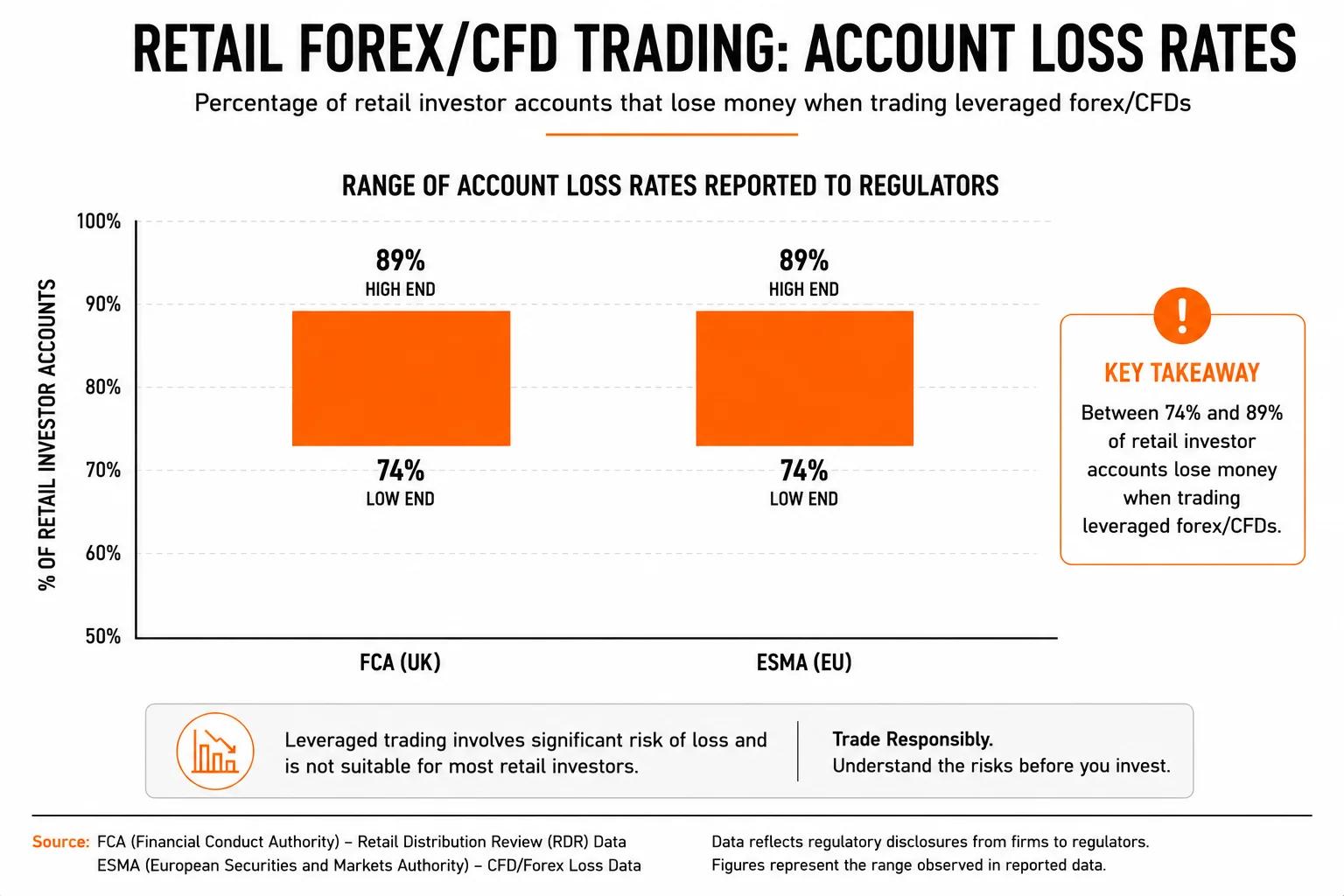
How Much Do Forex Traders Actually Make? A Realistic Income Breakdown
A realistic, data-grounded breakdown of forex trader income across four trader types, from part-time retail to institutional, including what account size actually means for your earnings.
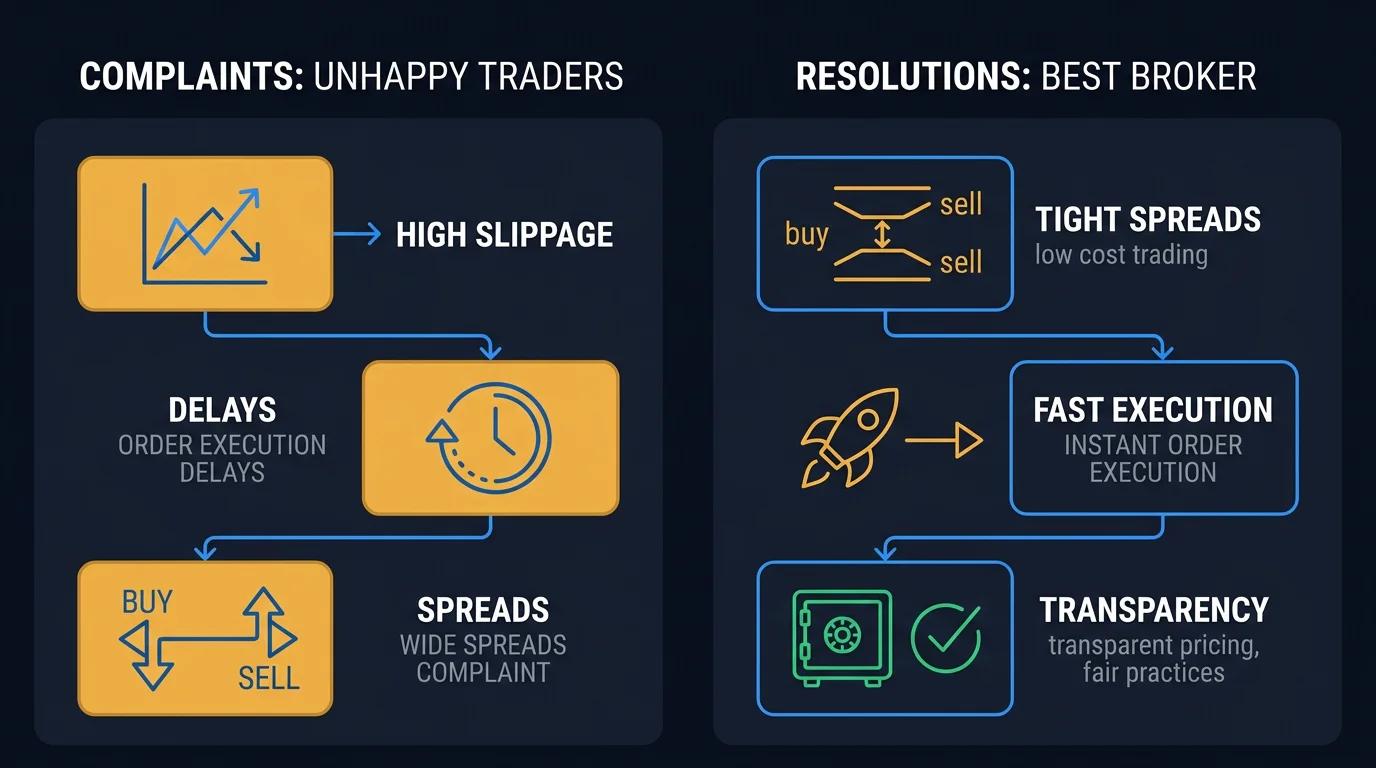
Which Forex Brokers Have the Most Complaints? What Regulatory Records Actually Show
Learn how to check forex broker complaint records across FCA, ASIC, NFA, and CySEC databases; and what those records actually tell you before you open an account.
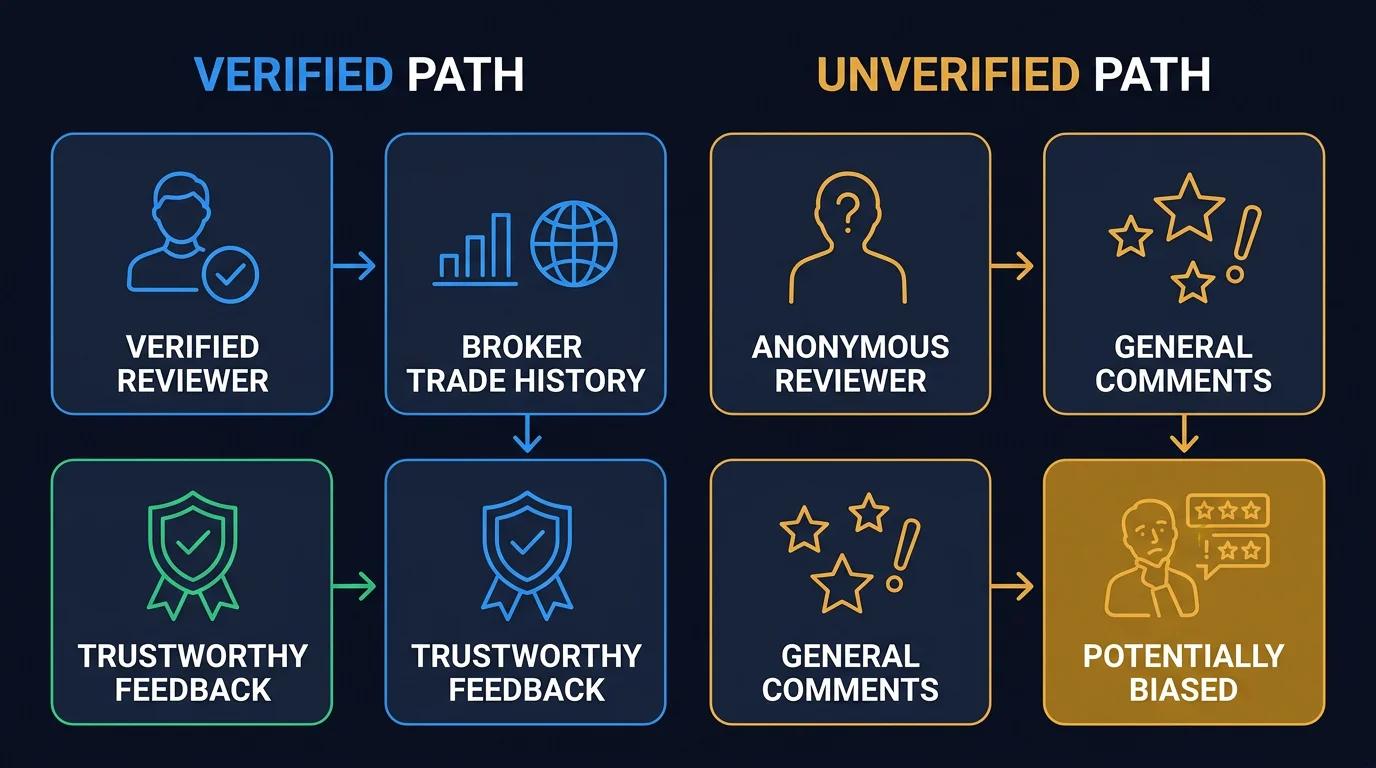
Verified vs Unverified Forex Broker Reviews: What the Difference Actually Means
What "verified" actually means on broker review platforms, how to spot fake review campaigns, and how to build a credibility framework that surfaces genuine signal before you open an account.
0 comments