


After years of speculation, the SpaceX IPO is right around the corner. The company filed its IPO prospectus with the SEC in May 2026, set a fixed share price in a June amendment, applied to trade on Nasdaq under the ticker SPCX, and is targeting pricing on 11 June with a first trading day around 12 June 2026.
This article gives you a clear, honest picture of what has actually been confirmed, what the timeline looks like, why investors are so interested, and how to avoid the scams that still cling to anything with SpaceX’s name on it.
A quick note before we start. Nothing here is investment advice. The dates and figures below come from SpaceX’s own filings and major financial reporting, but IPO terms are not final until shares are priced, and the schedule can still move if regulators request more disclosure or markets turn. Treat every number as a target until the company confirms it at pricing.
What the SpaceX IPO Means
An IPO, or initial public offering, is the moment a private company sells shares to the general public for the first time and lists them on a stock exchange.
Think of a members-only club that has finally decided to open its doors and sell memberships to anyone who turns up with cash. For most of its life, SpaceX has been that club. Ownership has sat with a relatively small group: Elon Musk, early backers, venture investors, and employees holding equity. With this offering, the doors are opening.
Going public changes a few concrete things:
- Shares will trade on Nasdaq, so anyone with a brokerage account that offers Nasdaq access can buy or sell them once trading begins.
- The company has to publish detailed financial statements, which is exactly what the S-1 prospectus already revealed.
- The trading price will be set by open-market supply and demand, not by negotiations behind closed doors.
That last point matters more than most beginners realise, and it shapes everything that follows. So how far along is the process really?
SpaceX Is Going Public: What Has Been Confirmed
SpaceX filed its public S-1 prospectus with the SEC on 20 May 2026, followed by an amendment on 1 June that fixed the offer price. It has applied to list Class A common stock on Nasdaq under the ticker SPCX.
The headline numbers being reported are striking: a fixed price of roughly $135 per share, around 555.6 million shares on offer, a raise of about $75 billion, and a target valuation near $1.75 trillion. If those hold at pricing, this would be the largest IPO on record. They remain targets until shares are formally priced.
SpaceX’s Ownership and How the Offering Is Structured
For years, SpaceX raised money the way most large private tech firms do, through funding rounds where a limited set of investors bought equity directly. It never needed the public markets to fund operations, which is a big part of why it stayed private for so long.
The offering keeps insiders firmly in control. SpaceX is using a dual-class share structure: the Class A stock sold to the public carries one vote per share, while insider Class B shares carry ten votes each. The practical result is that Musk retains roughly 85% of the voting power. As a public investor, you would be buying economic exposure to the business, not a meaningful say in how it is run. That trade-off is worth understanding before anything else.
How SpaceX Moved From Speculation to a Filing
The old line that an IPO was distant wishful thinking no longer fits the facts. SpaceX filed confidentially with the SEC in April, made its prospectus public in May, set terms in a June amendment, and launched its investor roadshow on 4 June. Those are the decisive, on-the-record steps a company takes when it is genuinely going public.
The business being listed is also broader than many people assume. SpaceX now combines its launch operations, Starlink connectivity, and the xAI artificial-intelligence group, which it merged with earlier in 2026. Which brings us to the question everyone is now searching: exactly when does this happen?
The SpaceX IPO Timeline
You no longer need to guess at a date. The reported schedule is concrete, even if it can still shift.
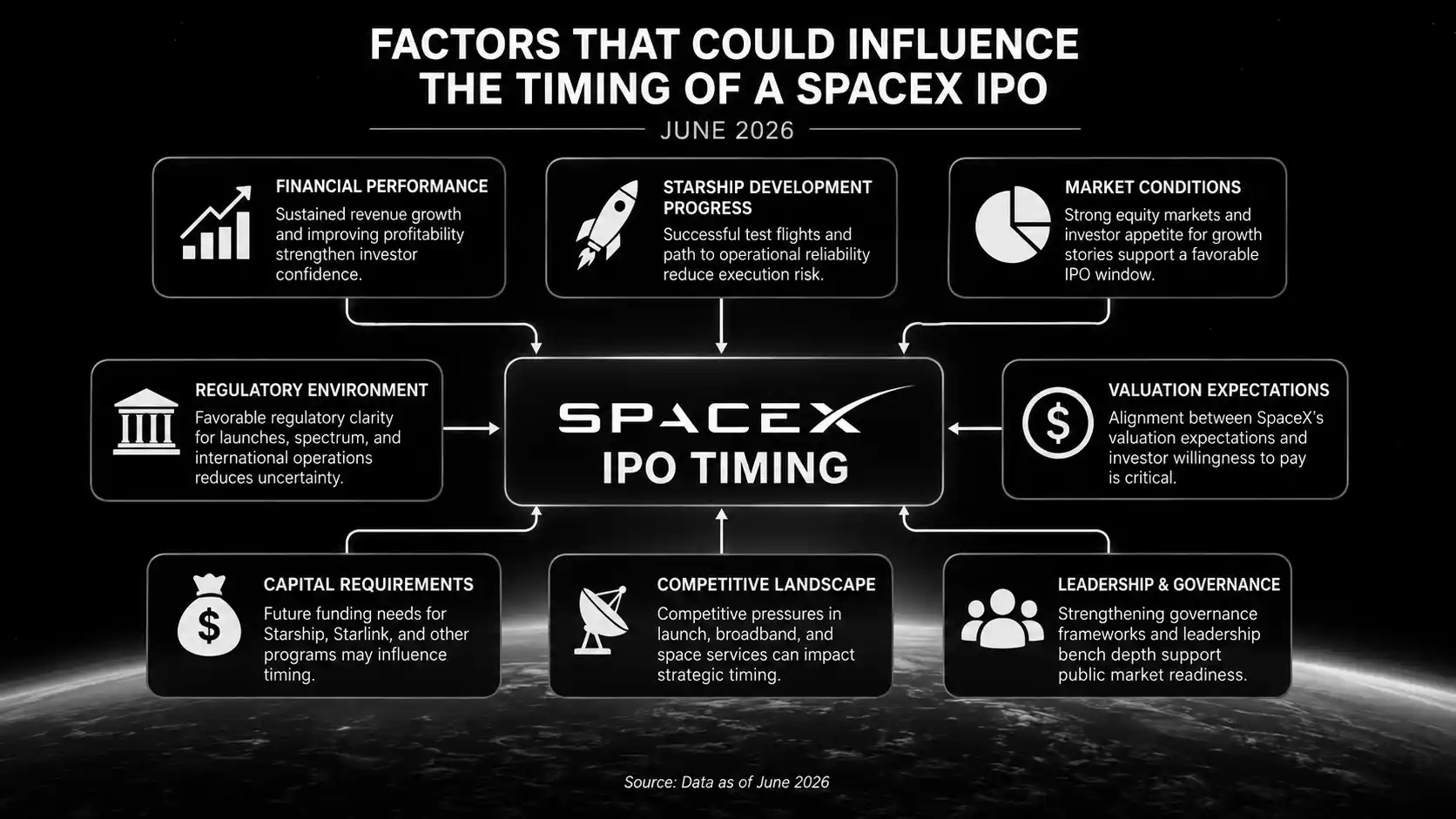
The key milestones being reported are:
- 20 May 2026: public S-1 prospectus filed with the SEC.
- 1 June 2026: Amendment No. 1 settled the fixed $135 share price.
- 4 June 2026: investor roadshow began.
- 11 June 2026: share pricing expected after market close.
- 12 June 2026: targeted first day of trading on Nasdaq under SPCX.
What Could Still Change Before Listing Day
The listing date depends on the SEC’s registration becoming effective and on market conditions holding up through the roadshow.
Pricing terms, including the final share count and the money raised, are only locked in when shares are priced. If volatility spikes or regulators ask for more disclosure, dates can slip. Read the schedule as firm intent, confirmed at pricing.
Why There Is So Much Interest in a SpaceX IPO
The eagerness to own SpaceX has real business reasons behind it, not manufactured hype. Knowing them helps you tell genuine interest from noise.
The Starlink Growth Story
Starlink took a hard problem, beaming fast internet to remote and underserved places, and turned it into a subscription product with a growing customer base. Recurring revenue from subscribers is attractive because it is relatively predictable, and that predictability is what investors pay up for.
For many people watching SpaceX, Starlink is the real engine behind the excitement. But it is not the only one.
The Launch Business and Reusability
SpaceX changed the economics of reaching orbit by landing and reusing its rockets. Picture an airline that scrapped the plane after every flight, then picture one that simply refuels and flies again. Reusability dramatically lowers the cost per launch, and that cost advantage has made SpaceX a dominant force in commercial launches.
Add the long-term Mars ambitions and the newer push into AI through xAI, and you have a company that captures imagination and market share at once. All of which raises the obvious question: what is it actually worth?
How SpaceX Is Being Valued at IPO
The valuation attached to this listing is enormous, and it is important to understand what that number does and does not tell you.
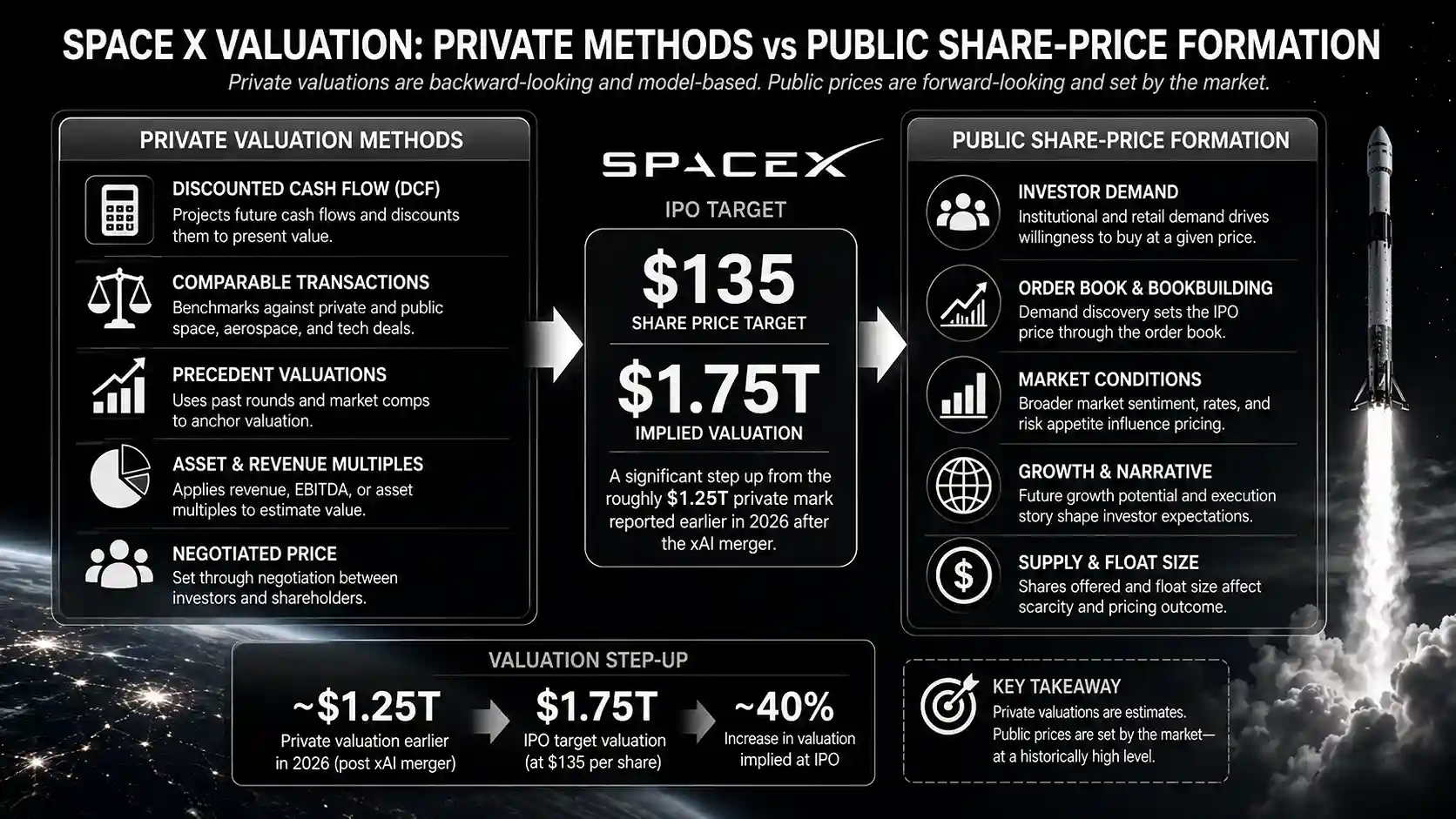
At a $135 share price, SpaceX is targeting a valuation around $1.75 trillion. That is a significant step up from the roughly $1.25 trillion private mark reported earlier in 2026 after the xAI merger, which means new public investors would be buying in at a historically high level. The prospectus also discloses that the company is not consistently profitable and has reported substantial losses, which is normal for a heavy-investment business but relevant to anyone weighing the price.
Why the IPO Price Is Not a Promise of Future Returns
This is the part to read twice. The $135 figure is a fixed offer price negotiated for the listing. Once trading opens, the market sets the price live, every second, and it can move sharply in either direction.
A large headline valuation tells you nothing reliable about whether the stock will rise or fall after it lists. Several real risks sit underneath that number: heavy reported losses, a very high valuation relative to current revenue, limited voting rights for public shareholders, and the mechanical buying that can follow any future index inclusion rather than genuine conviction. Do not anchor your expectations to a target price.
So if the stock is about to be listed, how should you think about actually getting hold of it?
How to Get Exposure to SPCX
Once SpaceX lists, targeted for 12 June, SPCX will be buyable through any broker that offers Nasdaq access, the same way you would buy any other public stock. Some brokers may also offer their clients a chance to participate in the IPO allocation itself, though access to that is never guaranteed. Until the stock actually begins trading, there is no public SpaceX share to buy through a normal exchange.
That distinction is key, because the gap before listing is where the danger lives.
Pre-IPO and Pre-Listing Share Offers: The Risks
A genuine, regulated path to the shares is arriving with the public listing. That makes any unsolicited offer claiming to sell you exclusive SpaceX pre-IPO shares before the listing a serious warning sign rather than an opportunity.
Be extremely careful with anything that markets itself this way. Common red flags include:
- Unsolicited offers promising access to shares that are normally restricted.
- Pressure to act quickly before a supposed deadline.
- Vague or unverifiable structures, special purpose vehicles, or intermediaries you cannot fully vet.
- Anyone guaranteeing returns or implying the listing is risk-free.
These offers can carry serious risk of total loss, including outright fraud. If an opportunity feels engineered to rush you, that pressure is itself the warning. Slow down, and verify any party through official regulatory channels before parting with money. It is also worth remembering that even buying SPCX through a legitimate broker at or after listing carries real risk; a confirmed IPO does not mean a safe investment.
What to Watch as the Listing Approaches
You do not need a tip-off to stay informed. You need to know which signals are authoritative, so you can tell confirmed information from noise.
Keep an eye on a few concrete things:
- Official filings on SEC EDGAR, including any further amendments to the S-1, which are the definitive record.
- Final pricing, expected around 11 June, which sets the real share count, raise, and valuation.
- Statements from SpaceX and its underwriters, rather than secondhand speculation or forwarded messages.
- How the stock behaves after listing, and the lockup expiry later in 2026, when early shareholders become free to sell.
Treat dramatic headlines and any early-access pitch with healthy scepticism. Confirmed information comes from filings and the company, not from a message promising to get you in before everyone else.
Frequently Asked Questions


Comments