


Anger in Trading: Why It Happens and How to Control It
Anger in trading is one of the most common yet least discussed problems traders face. It’s a predictable response to a high-stakes environment where uncertainty never takes a day off. But left unchecked, anger will cost you far more than any single bad trade ever could.
This article breaks down why anger shows up in your trading, how it quietly erodes your performance, and what you can actually do about it: before, during, and after it strikes. This is educational content, not psychological or financial advice. If you’re dealing with persistent emotional difficulties, consider speaking with a qualified professional.
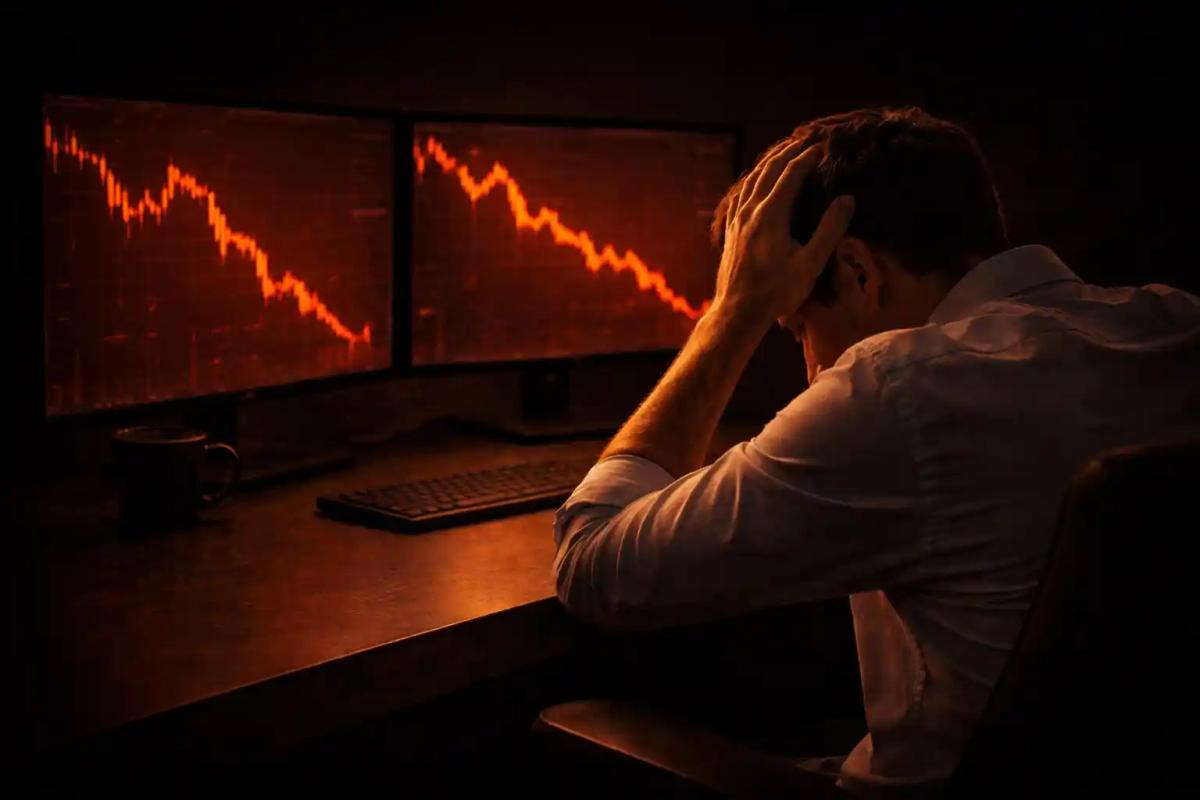
What Anger in Trading Actually Looks Like
Most traders picture anger as slamming a keyboard or shouting at a screen. The reality is usually quieter, more subtle, and far more dangerous precisely because it hides so well.
Physical and Behavioral Signs Traders Miss
Your body registers anger before your conscious mind catches up. Clenched hands, shallow breathing, a tight chest, tension creeping into your shoulders: these are all signals that your nervous system has shifted into a reactive state. You might notice yourself scrolling charts faster, clicking more aggressively, or feeling a sudden urgency to “do something” even when your plan says wait.
The behavioral signs are just as telling. You start checking your P&L every few seconds. You abandon your watchlist and start hunting for setups on random pairs or tickers. You override your position sizing. None of these are rational decisions. They’re anger wearing a thin disguise.
The Difference Between Frustration and Destructive Anger
Not all frustration is harmful. A brief flash of annoyance after a losing trade can be useful. It signals that something didn’t go as expected, which can prompt a genuine process review.
Destructive anger is a different animal. It clouds your ability to assess the next trade with any objectivity. The real question is whether the emotion passes and you return to your plan, or whether it hijacks your decision-making and starts driving the car. If you find yourself placing trades to prove a point or “get back” at the market, you’ve crossed from normal frustration into dangerous territory.
So what pushes traders across that line?
Why Traders Get Angry
Anger in trading follows specific, predictable patterns tied to how your brain is wired. Understanding these triggers is the first step toward intercepting anger before it takes the wheel.
Losing Money and the Threat Response
Your brain treats financial loss much the way it treats physical danger. Research in behavioral finance has consistently linked monetary loss to activation of the same neural pathways involved in the fight-or-flight response. When you lose money on a trade, your amygdala fires as if you’re under genuine threat, flooding your system with cortisol and adrenaline.
Think of it like touching a hot stove. Your hand jerks back before you consciously decide to move. In trading, the equivalent is an impulsive trade placed before rational thought has a chance to engage. Your brain is doing exactly what evolution designed it to do. The problem is that the trading environment rewards the opposite response: patience, stillness, and calculated action.
Feeling Out of Control in Unpredictable Markets
Humans crave a sense of control. When markets move in ways that feel random, unfair, or outright rigged, that sense of control evaporates fast. Slippage on an entry. A sudden news spike that wipes out a winning position. A stop-hunt that hits your level to the pip before reversing. These moments can feel deeply personal even though they aren’t.
The anger that follows is about the feeling that you can’t influence the outcome no matter what you do. That specific brand of helplessness is one of the most potent anger triggers for traders at every level.
Broken Expectations and the Plan vs. Reality Gap
You did your analysis, identified a clean setup, followed your risk management rules, and you still lost. The gap between what you expected and what actually happened is fertile ground for anger, particularly when you feel you “did everything right.”
This is where loss aversion, the well-documented tendency to feel losses roughly twice as intensely as equivalent gains, amplifies the emotional fallout. Your plan said this trade had a solid probability of working. When it didn’t, the emotional response lands far out of proportion to the actual financial impact.
But how does that anger actually translate into damage on your account?
How Anger Destroys Trading Performance
Anger systematically dismantles the discipline that separates consistent traders from those who blow accounts.
The Revenge Trading Trigger
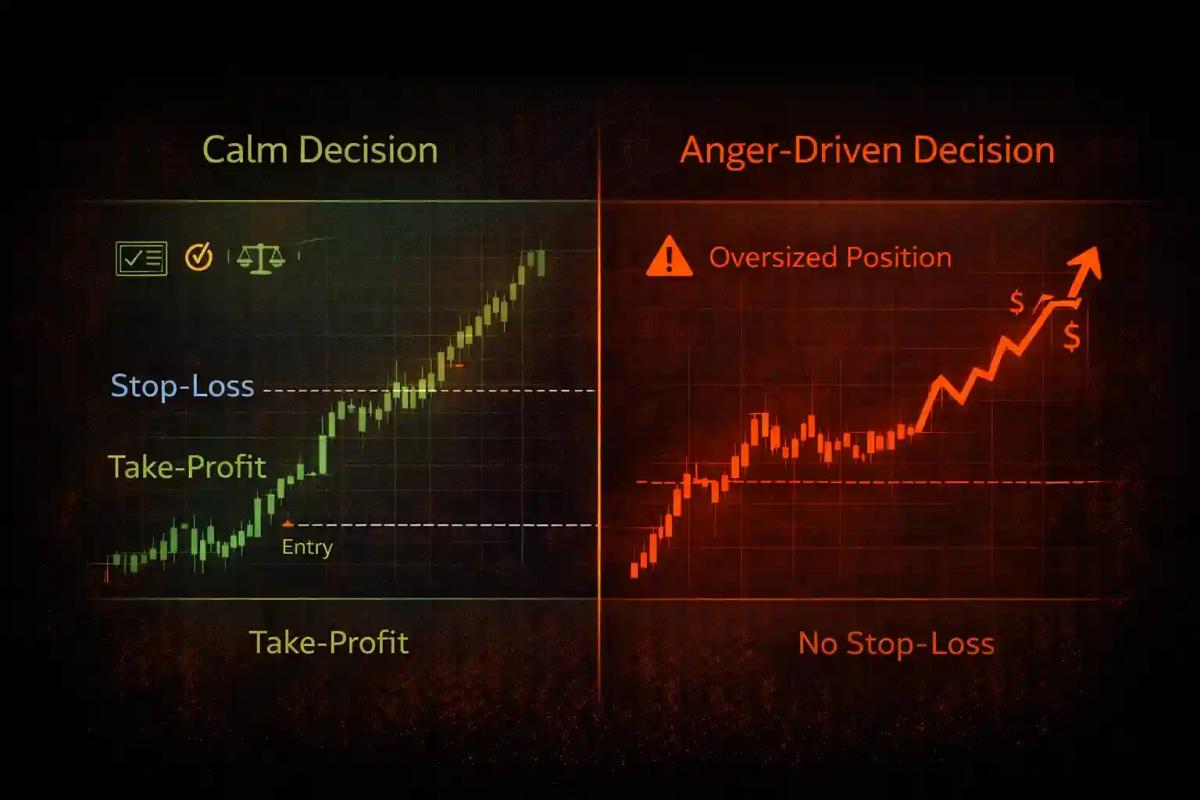
Revenge trading is anger’s most destructive expression in the markets. It’s the act of immediately entering a new trade, usually with larger size and weaker logic, specifically to recover what was lost. The goal shifts from executing your strategy to proving the market wrong, or proving yourself right.
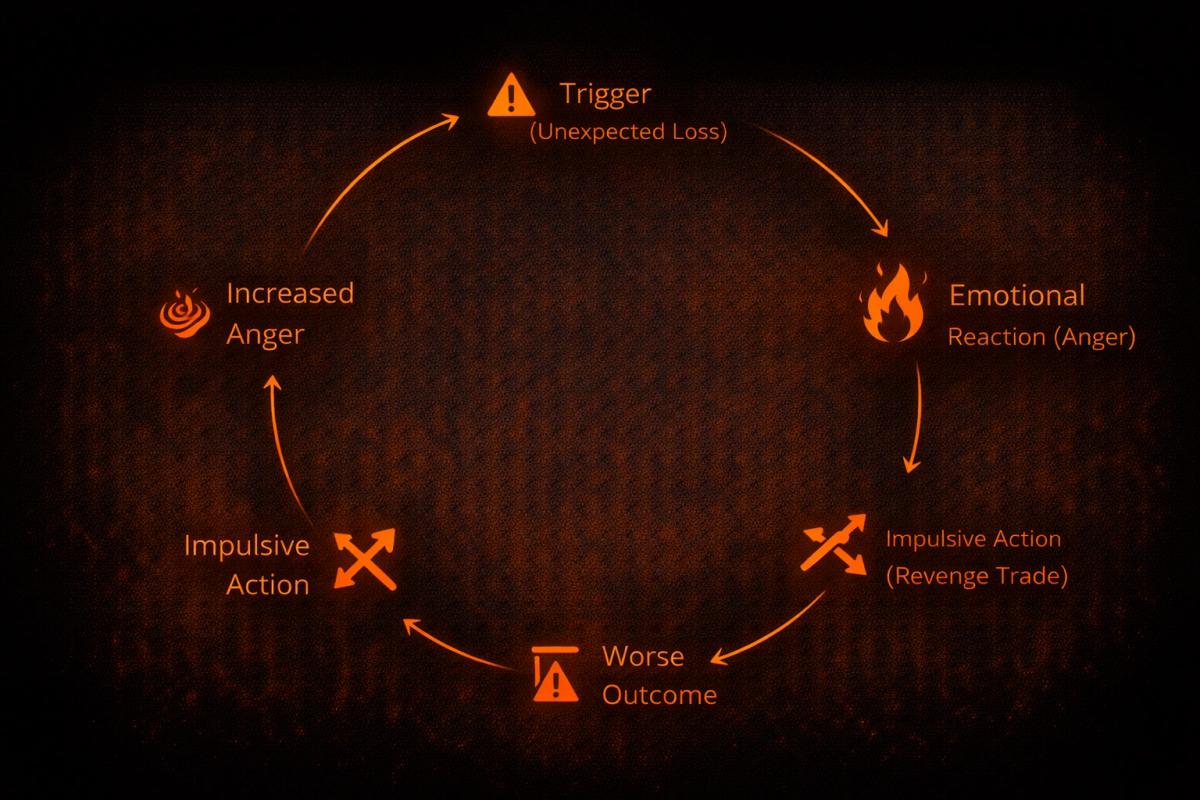
Revenge trades almost always carry worse risk-to-reward profiles than your planned setups. You’re trading to satisfy an emotion, not a strategy. And when a revenge trade also loses (which happens often, because it was never grounded in sound analysis), the anger compounds. Loss, anger, impulsive trade, bigger loss, deeper anger. The loop feeds itself.
Overriding Risk Management Rules
When anger takes over, rules start to feel like obstacles. You tell yourself “just this once” as you double your lot size or drag your stop-loss further away. In that moment, the rules you carefully designed to protect your capital feel less important than the burning need to be right.
This is one of the most expensive ways anger manifests. A single emotionally charged position, taken at three or four times your normal risk, can erase weeks of disciplined work. And the part that stings most? You knew better. That realization only feeds the frustration further.
Decision Fatigue and Emotional Exhaustion
Even if anger doesn’t trigger a single catastrophic trade, it drains your cognitive resources across an entire session. Every burst of frustration consumes mental energy. Your ability to read charts, assess probability, and execute with precision degrades with each emotional spike.
By the end of an anger-filled session, you’re making decisions with a fraction of the mental sharpness you started with. It’s like trying to run a marathon after sprinting the first mile. You might still finish, but every step after that opening burst is compromised.
The real question is whether you can intercept the anger before it gets this far.
Controlling Anger Before It Starts
The most effective frustration management happens before you ever place a trade. Think of it as building a firebreak before fire season versus fighting a blaze once it’s already tearing through dry brush.
Pre-Session Preparation and Mental Checklists
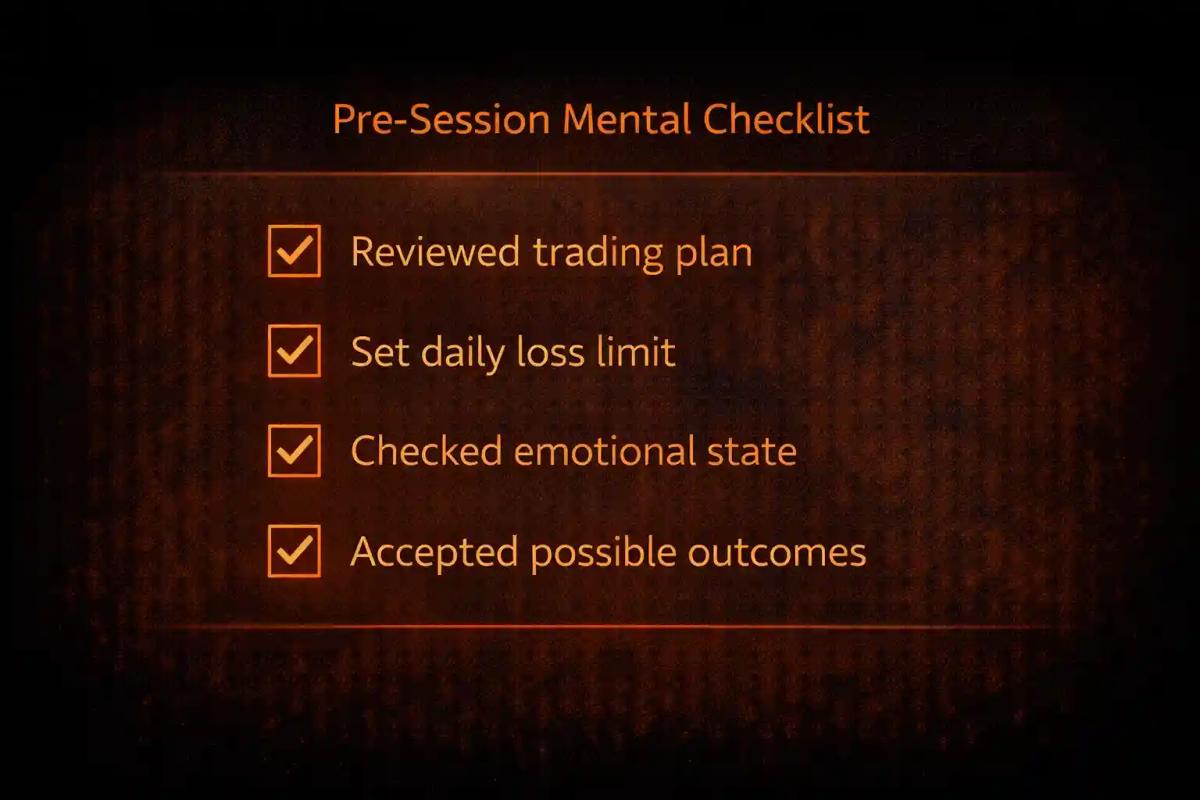
A simple mental checklist before each session can dramatically reduce the chance of anger catching you off guard. Before you open your charts, run through these questions:
- Have I reviewed my trading plan for today?
- Am I in a calm, neutral emotional state right now?
- Have I accepted that I might lose today, and am I genuinely okay with that?
- Is there anything outside of trading (personal stress, poor sleep, unresolved conflict) that might lower my tolerance for frustration?
This takes two minutes. It’s a legitimate systems check, the same way a pilot runs through pre-flight checks because catching one issue early prevents a cascade of failures later.
Setting Realistic Expectations for Each Session
One of the biggest anger triggers is the gap between expectation and reality. You can close that gap before the session starts.
Instead of thinking “I need to make $500 today,” try framing your expectation around the process: “I will take only setups that meet my criteria, and I will follow my rules regardless of outcome.” This shift moves your definition of success from something you can’t control (market outcomes) to something you absolutely can (your behavior). When your expectations are process-based, a losing trade no longer automatically feels like failure.
Defining Personal Loss Thresholds in Advance
A daily loss limit is one of the most powerful emotional guardrails you can set. Decide before the session how much you’re willing to lose, both in a single trade and for the day overall.
When that threshold is hit, you stop. No negotiation, no exceptions, no “one more try.” This is a rule you create for yourself, written down and committed to in advance, precisely because you know clear thinking won’t be available in the heat of the moment.
But what if the anger arrives anyway, despite solid preparation?
Managing Anger in the Moment
Even with thorough preparation, anger will still visit. Markets are unpredictable, and you’re human. The goal is to create enough space between the feeling and your next action so that you, not the emotion, choose what happens next.
Recognizing the Trigger Point
You need to know your personal anger signatures. For some traders, it’s a clenched jaw. For others, it’s rapid, shallow breathing or an overwhelming urge to immediately enter a new trade. Whatever your particular signals are, learning to spot them is the single most important in-session skill you can develop.
Think of anger like a thermometer with a red zone. Your job is to notice the temperature rising while it’s still in the orange, before it hits red. Once you’re fully triggered, rational decision-making goes offline, and every technique becomes significantly harder to apply.
The Forced Pause Technique
When you notice the signs, force a pause. This can look different for different people, but the structure stays the same:
- Close your hands. Unclench them slowly. This interrupts the physical tension loop.
- Take five deliberate, slow breaths. In through the nose, out through the mouth. This directly counteracts the fight-or-flight adrenaline response.
- Verbalize what just happened. Say it out loud or write it down: “I just took a loss on EUR/USD. I’m feeling angry because it hit my stop before reversing.” Naming the emotion reduces its grip.
- Ask one question: “Is my next action based on my plan or my feelings?” If the honest answer is “feelings,” do not trade.
This entire process takes roughly 60 to 90 seconds. It’s not about suppressing the anger. It’s about inserting a gap between stimulus and response so that you decide what happens next, not the adrenaline.
Stepping Away vs. Pushing Through
There’s a persistent myth in trading culture that “real traders” push through adversity. But staying at your desk while angry is plain stubbornness dressed up as toughness, and it usually leads to worse outcomes.
Stepping away for 10 to 15 minutes (leaving your desk, getting water, walking briefly) is one of the most strategically sound things you can do. The anger cycle needs fuel, and staring at flashing charts provides exactly that. Remove yourself from the stimulus, and the intensity drops noticeably.
The market isn’t going anywhere. The opportunities will still be there when you return with a clearer head.
But what if the damage is already done?
Rebuilding After an Emotional Outburst
You broke your rules, took a revenge trade, sized up on emotion and paid the price. Now what?
The period after an anger-driven session is critical. How you handle it determines whether the episode becomes a one-time mistake or a repeating pattern.
Reviewing Anger-Driven Trades Without Judgment
The instinct after a blowup is to either punish yourself relentlessly or pretend it didn’t happen. Neither helps. Instead, approach your anger-driven trades the same way you’d approach any other trade review: with curiosity, not condemnation.
Ask yourself:
- What was I feeling right before I entered this trade?
- Was there a specific event that triggered the emotion?
- At what point did I know I was off-plan, and why didn’t I stop?
The goal is data extraction. Every anger episode contains information about your personal triggers and vulnerabilities. That information is genuinely valuable, but only if you capture it honestly.
Journaling as a Pattern Detection Tool
A trading journal that tracks your emotional state alongside your trades is one of the most effective long-term tools for managing anger. Over time, patterns emerge that are simply invisible in the moment.
You might discover that your worst anger episodes cluster on Mondays, or after the third consecutive loss, or when you’re trading a specific asset. You might find that anger strikes more often when you’re sleep-deprived or when you traded outside your plan “just to test something.”
These patterns stay hidden without a written record. Journaling doesn’t need to be elaborate. Even a single word next to each trade (calm, frustrated, angry, impulsive) creates enough data to spot trends over a few weeks.
When Frustration Management Needs Outside Help
If anger is consistently disrupting your trading despite genuine effort to manage it, that’s useful information. Chronic anger that resists self-management techniques may be connected to patterns running deeper than trading itself: stress, unresolved personal issues, or underlying anxiety.
Working with a therapist who understands performance psychology (or a trading coach with psychology training) can help you address root causes that no article, checklist, or breathing exercise will reach. Seeking that kind of support is a sign of seriousness about your trading, not a sign of weakness.
Building Long-Term Emotional Resilience as a Trader
Managing individual anger episodes is essential, but lasting improvement comes from building a foundation of emotional resilience that makes anger less frequent and less intense over the long run.
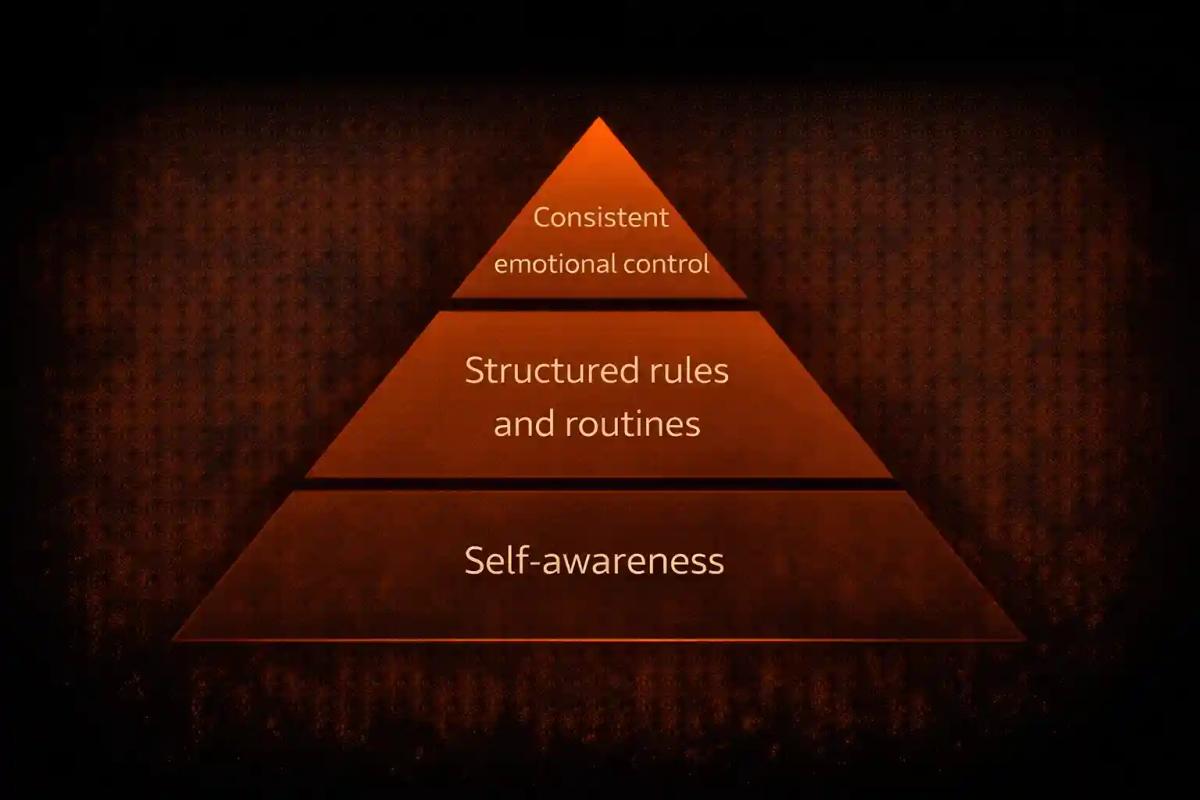
Separating Self-Worth from Trading Results
One of the deepest roots of trading anger is the unconscious belief that your P&L defines your value as a person. When a trade loses, it lands like a personal verdict.
Building resilience means consciously decoupling who you are from how your last trade performed. Your worth, and even your competence as a trader, isn’t determined by a single day, week, or month of results. Professionals in every demanding field (athletes, surgeons, trial lawyers) experience losses and failures regularly. What separates them is that they’ve learned to evaluate performance across time, not outcome by outcome.
This shift starts with awareness. Every time you catch yourself thinking “I’m a terrible trader” after a loss, pause and reframe: “That trade didn’t work. I followed my process. One result doesn’t define my skill.”
Creating Rules That Protect You from Yourself
Your best trading psychology insights arrive when you’re calm and objective. Your worst decisions arrive when you’re angry and reactive. The solution is to build rules during the calm periods that automatically protect you during the emotional ones.
These might include:
- A hard daily loss limit that triggers an automatic stop for the day
- A “two consecutive losses” rule requiring a 15-minute break
- A position sizing cap that cannot be overridden mid-session
- A rule against trading any instrument not on your pre-session watchlist
The key is that these rules are non-negotiable. You design them when your thinking is sharp, and you commit to following them even (especially) when your emotions are screaming at you to ignore them. Over time, these guardrails become habits, and the anger that once drove reckless decisions gradually loses its hold.
Frequently Asked Questions
Is anger during trading normal, or is it a sign of a deeper problem?
Some frustration during trading is completely normal, especially during losing streaks or unexpected market moves. It becomes a concern when the anger is persistent, disproportionate to the situation, or consistently leads to impulsive decisions that break your trading plan. If anger is an occasional visitor, you can likely manage it with the techniques above. If it's a constant companion, it may be worth exploring with a professional.
How do I stop a revenge trade once the anger impulse has already started?
The most effective immediate step is to physically remove yourself from your trading setup. Close your laptop, step away from the desk, or switch to a different screen entirely. The impulse to revenge trade is strongest in the first 30 to 60 seconds after a triggering loss. If you can survive that window without acting, the urge typically weakens. Having a predefined rule (like "no new trades for 10 minutes after any loss exceeding X") takes the decision out of your hands when you need it most.
How long does it take to develop better emotional control in trading?
There's no fixed timeline, and anyone promising one is oversimplifying. Most traders who consistently practice self-awareness, journaling, and pre-session routines report noticeable improvement within a few weeks to a few months. But emotional control isn't a destination. It's a skill you maintain. Even experienced professionals have bad days. The difference is they recover faster and the damage stays smaller.
Can taking a break from trading help with anger issues?
Yes, a deliberate break can be genuinely helpful, especially if anger has become your default state during sessions. A break of a few days to a couple of weeks allows your nervous system to reset and gives you space to reflect on patterns without live-market pressure. When you return, consider starting with smaller position sizes or even demo trading to rebuild your emotional baseline before scaling back up.
How does a trading journal help with anger management?
A trading journal that tracks your emotional state creates a record of patterns you simply can't see in real time. Over weeks, you'll notice correlations between anger episodes and specific conditions: time of day, certain instruments, consecutive losses, external stressors. These insights let you build targeted prevention strategies rather than relying on one-size-fits-all advice.
Can demo trading reduce emotional reactions?
Demo trading removes the financial risk that triggers the fight-or-flight response, so it can help you practice strategies and build confidence without the emotional intensity. That said, it doesn't fully replicate the emotional landscape of live trading because no real money is on the line. Demo trading works well for skill refinement and plan testing, but the deeper emotional work of anger management ultimately needs to happen with real capital, even if you start very small.
When should a trader consider professional help for anger?
Consider professional support if anger is a recurring pattern that hasn't improved despite consistent self-management efforts, if it's spilling into areas of your life beyond trading (relationships, sleep, health), or if you notice the intensity of your emotional reactions escalating over time. A performance psychologist or therapist familiar with high-pressure decision-making environments can offer tools and perspectives that self-directed approaches may not reach.
About the authors


Related articles
Analysis Paralysis in Trading: Why You Freeze and How to Fix It
Learn to recognize analysis paralysis in trading, understand its psychological roots, and build a decision-making framework with confident execution.
Anchoring Bias in Trading: How Mental Price Traps Cost You Money
Learn how anchoring bias distorts your trading decisions. Spot mental price traps, break free from fixation on entry prices, and build systems to protect your returns.
Anxiety in Trading: Understanding and Managing Doubt
Trading anxiety isn't a flaw — it's biology. Learn why doubt strikes, how it warps your decisions, and practical techniques to manage it before, during, and after every trade.
0 comments