


How to Build a Pre-Market Routine That Keeps You Focused
A solid pre-market routine is the difference between walking into the session with a plan and stumbling in hoping for the best. This guide breaks down how to build one that covers both the mental and practical sides of preparation, so you can sit down each morning feeling calm, focused, and ready to execute.
Why Most Traders Lose Before the Market Even Opens
Ever notice how some of your worst trading days felt off before you even placed a trade? The outcome of your session is often shaped by what happens in the hour before the opening bell.
The Cost of Trading Without Preparation
Walking into the market unprepared is like stepping onto a football pitch without warming up. You might get through it, but your reaction time is slower and your judgment is cloudier.
Without a plan, every price spike feels urgent. Every red candle feels personal. Every missed move feels like something you need to chase. You hand control of the session to your emotions, and they rarely give it back quietly.
Sometimes the cost is obvious: a blown stop, an impulsive entry. Other times it’s subtle: a slightly wider stop here, an extra trade that didn’t meet your criteria there, a position held ten minutes too long. These small leaks, compounded over weeks, quietly erode whatever edge you’ve built.
What Separates Consistent Traders from Reactive Ones
Consistent traders aren’t people who never feel fear or greed. They’ve simply built systems that prevent those emotions from steering decisions. They check in with themselves, review the landscape, and define their rules before the first candle prints.
Reactive traders let the market dictate their focus. A big move appears, the fear of missing it kicks in, and they enter without a thesis. That approach rarely ends well.
So what does a strong pre-market routine actually look like? It starts not with your charts, but with your own head.
The Mental Side of Your Pre-Market Routine
Here’s something most trading content glosses over: checking your charts before checking in with yourself is a mistake. If you sit down already anxious or riding high on yesterday’s win, no amount of technical analysis will protect you from poor decisions.
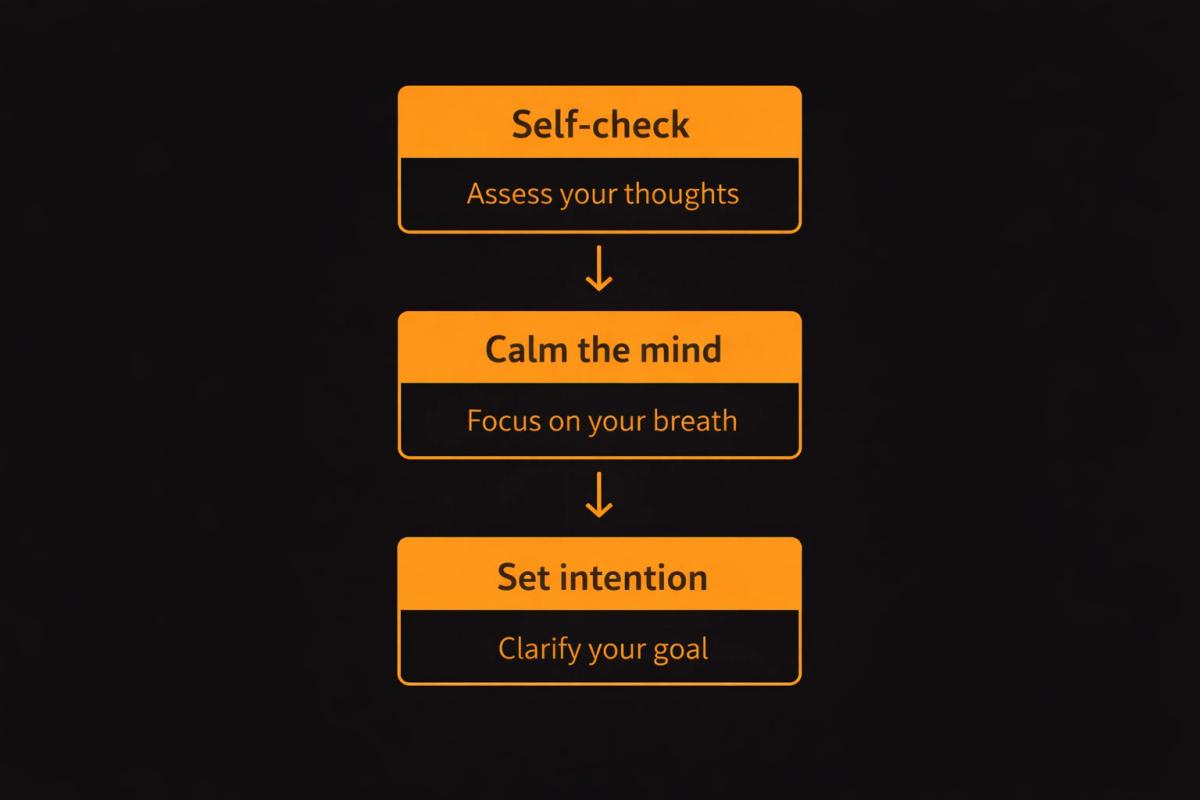
Checking In With Yourself Before Checking the Charts
Before you open a single chart, take sixty seconds to ask yourself a few honest questions:
- How did I sleep?
- Am I carrying stress from outside trading?
- Am I feeling the pull to “make back” yesterday’s loss?
If you notice you’re in a heightened emotional state, you should trade smaller or stick to A-plus setups only. Recognizing your emotional readiness before the market opens is one of the most underrated edges you can develop.
Techniques for Calming a Busy Mind
You don’t need a meditation app or a 30-minute yoga session. What you need is a brief method for lowering the mental noise before making decisions with real money on the line.
- Box breathing: Inhale for 4 counts, hold for 4, exhale for 4, hold for 4. Repeat for 2 minutes. This activates your parasympathetic nervous system and measurably lowers your heart rate.
- Written brain dump: Spend 3 minutes writing whatever’s on your mind. The goal is to externalize mental clutter so it stops looping in your head.
- Visualization: Close your eyes for 60 seconds and mentally walk through a session where you follow your rules calmly, regardless of outcome.
The point is to bring your baseline down enough that you’re responding to the market rather than reacting to it.
But a calm mind alone won’t carry you if you don’t know what you’re aiming for.
Setting Your Intention for the Session
This takes 30 seconds and has an outsized impact. Before you start analysis, write down a single process goal for the day. Something like: “Today I will wait for my setup to come to me,” or “Today I will respect my stop loss on every position.”
This intention becomes your anchor. When the market gets choppy and the urge to deviate creeps in, you have something concrete to pull you back.
Now that your mind is in the right place, it’s time to put your analysis in order.
The Practical Side of Your Pre-Market Routine
Feeling calm and focused is only half the equation. You also need to know what you’re looking at and what your plan is for it.
Reviewing Key Levels, News, and the Economic Calendar
Start with the big picture. Your review should cover:
- Key technical levels: Support and resistance zones, previous day’s high and low, significant higher-timeframe levels
- Overnight price action: How did the Asian and European sessions trade? Did price gap from yesterday’s close?
- Economic calendar: High-impact events and their scheduled times. Knowing a Fed speaker is on at 2 PM keeps you from being blindsided.
- Relevant news: Sector developments, geopolitical shifts, or headline risk affecting your instruments
This doesn’t need to take long. Ten to fifteen minutes is plenty. You’re building a mental map of the day so nothing catches you off guard.
With the landscape clear, how do you narrow your focus?
Building a Watchlist With Purpose
A good watchlist isn’t every instrument that moved overnight. It’s a short, curated selection of 3 to 5 names that align with your strategy.
For each one, ask:
- Is it near a significant level?
- Does recent price action match a setup I trade?
- Is there a catalyst supporting a move?
If the answer is no to all three, it doesn’t belong on your watchlist today. Discipline here saves you from chasing noise later.
Defining Your Rules for the Day
This is where preparation meets risk management. Before the market opens, write down your specific parameters:
- Maximum trades: “No more than 3 trades today.”
- Risk per trade: “No more than 1% per position.”
- Daily loss limit: “If I lose 2%, I stop for the day.”
- Setup criteria: “Only setups from my watchlist that meet all entry conditions.”
Writing these down turns vague intentions into firm commitments. Your pre-written rules become the guardrails when the heat arrives.
Let’s put this all together into something you can use starting tomorrow.
A Sample Pre-Market Checklist You Can Adapt
Think of this like a pilot’s pre-flight procedure. Pilots don’t skip steps because the weather looks good. That consistency is exactly what keeps things running smoothly when conditions get rough.
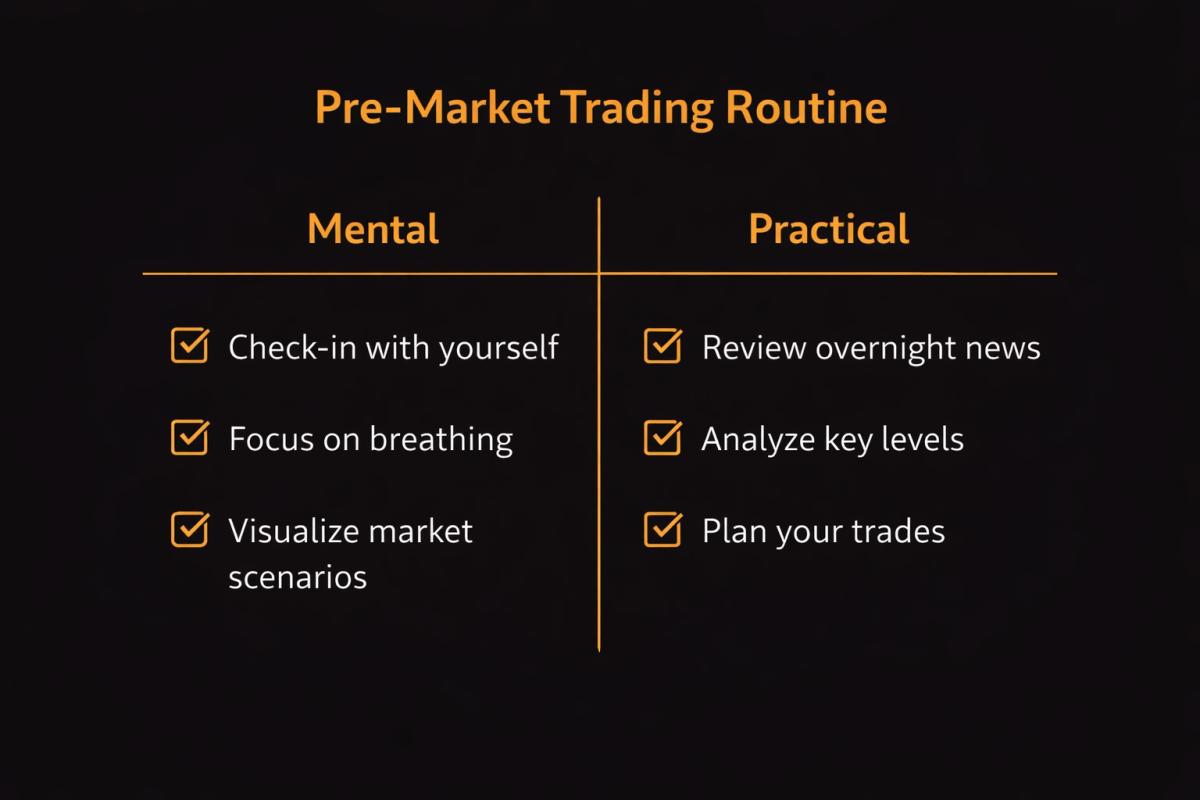
The 30-Minute Routine
The 60-Minute Routine
Neither version is “correct.” The right routine is the one you’ll actually follow.
But what happens when you don’t follow it?
Common Mistakes That Undermine Your Morning Preparation
Even traders who build a solid routine can sabotage themselves in predictable ways.
Skipping the Routine on “Easy” Days
The market’s been trending cleanly, you’re on a winning streak, and the routine feels unnecessary. So you skip it. That’s usually the day the market reverses and a chunk of your gains evaporate.
A basketball player doesn’t stop stretching because the opponent looks weak. Your routine protects you from your own overconfidence just as much as it protects you from the market.
Over-Preparing to the Point of Paralysis
Some traders spend so long preparing they never feel “ready enough.” They review every timeframe, read every headline, and mark so many levels their charts look like abstract art.
Over-preparation is often anxiety wearing a productive mask. Set a timer. When your routine is done, trust the work you’ve put in and shift into execution mode.
How do you make sure this isn’t just another thing you try for a week and quietly abandon?
How to Make Your Routine Stick Long-Term
Building a routine is one thing. Maintaining it when life gets busy or when you hit a losing streak is another challenge entirely.
Tracking and Adjusting Over Time
Your routine is a living system, not a fixed script. After each session, briefly note:
- Did I complete it?
- How did I feel compared to days I skipped?
- Were any elements unhelpful?
- Was anything missing?
Over weeks, patterns emerge. Let the data guide your adjustments rather than changing things on impulse.
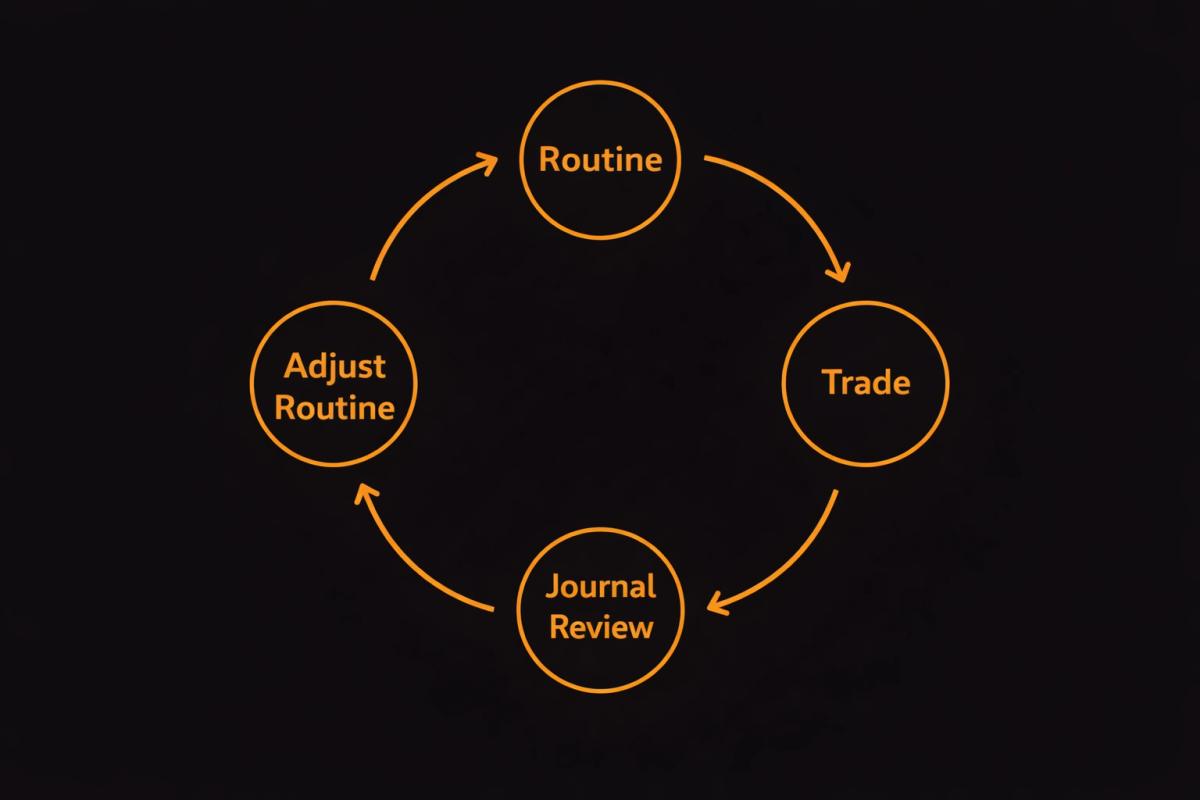
Connecting Your Routine to Your Trading Journal
Your pre-market routine and your trading journal should feed into each other. In your journal, include a brief note about your pre-market state: your intention, how you felt going in, whether you completed the full routine.
Over time, you’ll spot correlations. Maybe your best weeks share a common thread: full routine completion, low emotional volatility, clear intentions. That connection turns your routine from a standalone habit into a core part of how you define risk, manage yourself, and improve over time.
Frequently Asked Questions
How long should a pre-market routine take?
Most traders find that 30 to 60 minutes works well. The key is covering both mental and practical preparation without rushing or overextending. Start with a time frame that fits your schedule and refine it based on what you actually need.
Does the routine change depending on whether you scalp or swing trade?
The emphasis shifts. Scalpers might focus more on short-term levels and quick mental resets, while swing traders lean into higher-timeframe analysis. The mental preparation component, however, is valuable regardless of style.
What should I do if I still feel too anxious to trade after preparing?
Respect that signal. If you've gone through your full routine and still feel unsettled, reduce your size, limit yourself to one high-conviction setup, or sit out entirely. Protecting your capital on off days is itself a form of edge.
Should physical exercise be part of my pre-market routine?
Some form of movement, even a short walk or stretching, can improve focus and lower stress. If mornings are tight, prioritize the mental and practical steps and fit exercise in at another time.
How do I adapt my routine for different market sessions like London or Asia?
The structure stays the same, but the content changes. Your calendar review and key levels reflect different instruments and time zones. The mental preparation steps remain identical. Adjust the practical inputs to match your session, but keep the framework consistent.
Do beginners need a different routine than experienced traders?
Not fundamentally. Beginners benefit from a simpler version with fewer instruments and more time spent on mental preparation. As you gain experience, your routine naturally evolves. The important thing is to start with one, even a basic version, rather than waiting until you feel "experienced enough."
About the authors


Related articles

Analysis Paralysis in Trading: Why You Freeze and How to Fix It
Learn to recognize analysis paralysis in trading, understand its psychological roots, and build a decision-making framework with confident execution.

Anchoring Bias in Trading: How Mental Price Traps Cost You Money
Learn how anchoring bias distorts your trading decisions. Spot mental price traps, break free from fixation on entry prices, and build systems to protect your returns.
Anger in Trading: Why It Happens and How to Control It
Learn why anger strikes during trading, how it destroys performance through revenge trades and broken rules, and proven techniques to control it.
0 comments