


Stop-Loss Orders: Definition & Usage
Risk management separates traders who survive from those who don’t. Among the tools available for protecting capital, the stop loss order stands out as a mechanism every trader should understand before putting money at risk. This guide explains what stop loss orders are, how they function, and how to use them as part of a broader approach to trading risk management.
Whether you’re new to trading or refining your understanding, learning to place stop losses correctly helps you stay in the game longer and sidestep the costly mistakes that knock many traders out early.
This content is for educational purposes only and does not constitute financial advice. Trading involves risk, including the potential loss of capital.
What Is a Stop Loss Order
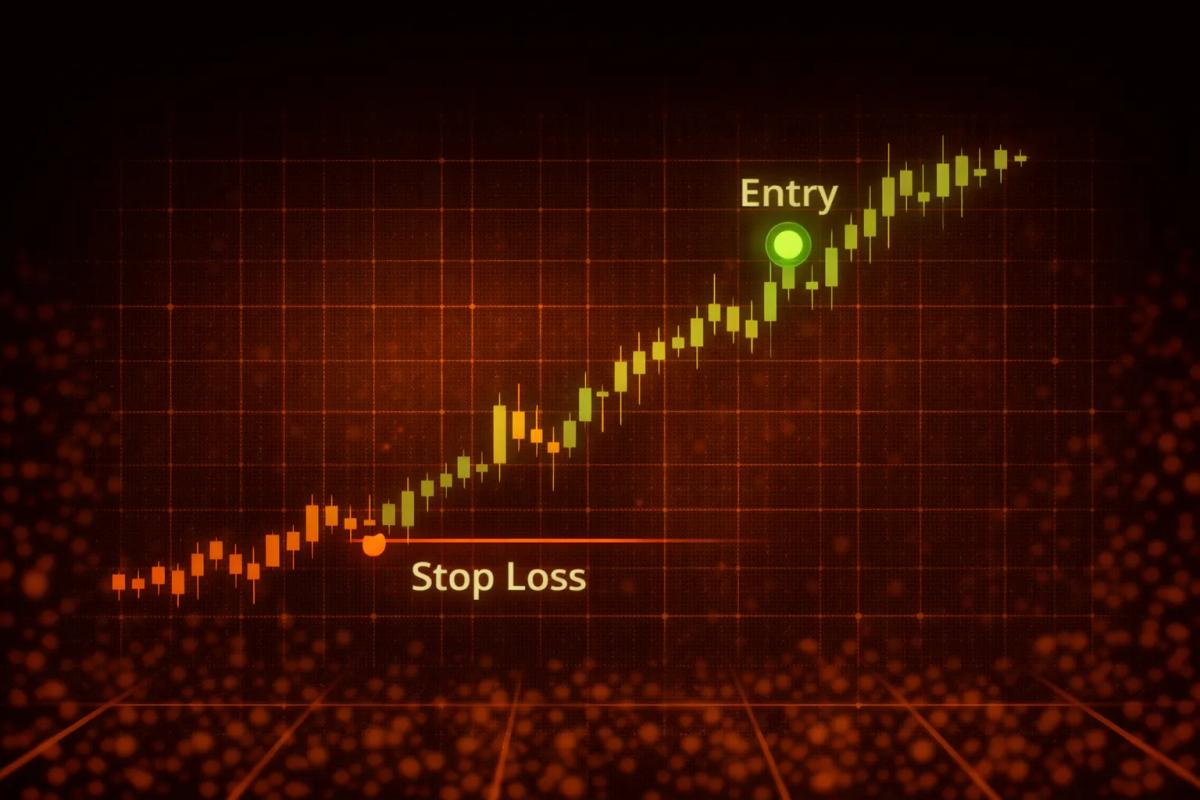
A stop loss order instructs your broker to close a trading position automatically when the price reaches a specified level. Its purpose is straightforward: exit before losses grow larger.
When you enter a trade, you’re betting your analysis is right about price direction. A stop loss acknowledges that analysis might be wrong and establishes an exit point in advance. Rather than watching charts constantly and making emotional decisions under pressure, the stop loss handles the exit mechanically.
How Stop Loss Orders Work
When you place a stop loss, you set a trigger price. If the market reaches that level, your order activates and executes.
For a long position (buying with the expectation price will rise), the stop loss sits below the entry price. If the price falls to the stop level, the position closes automatically. For a short position (selling with the expectation price will fall), the stop loss sits above the entry price.
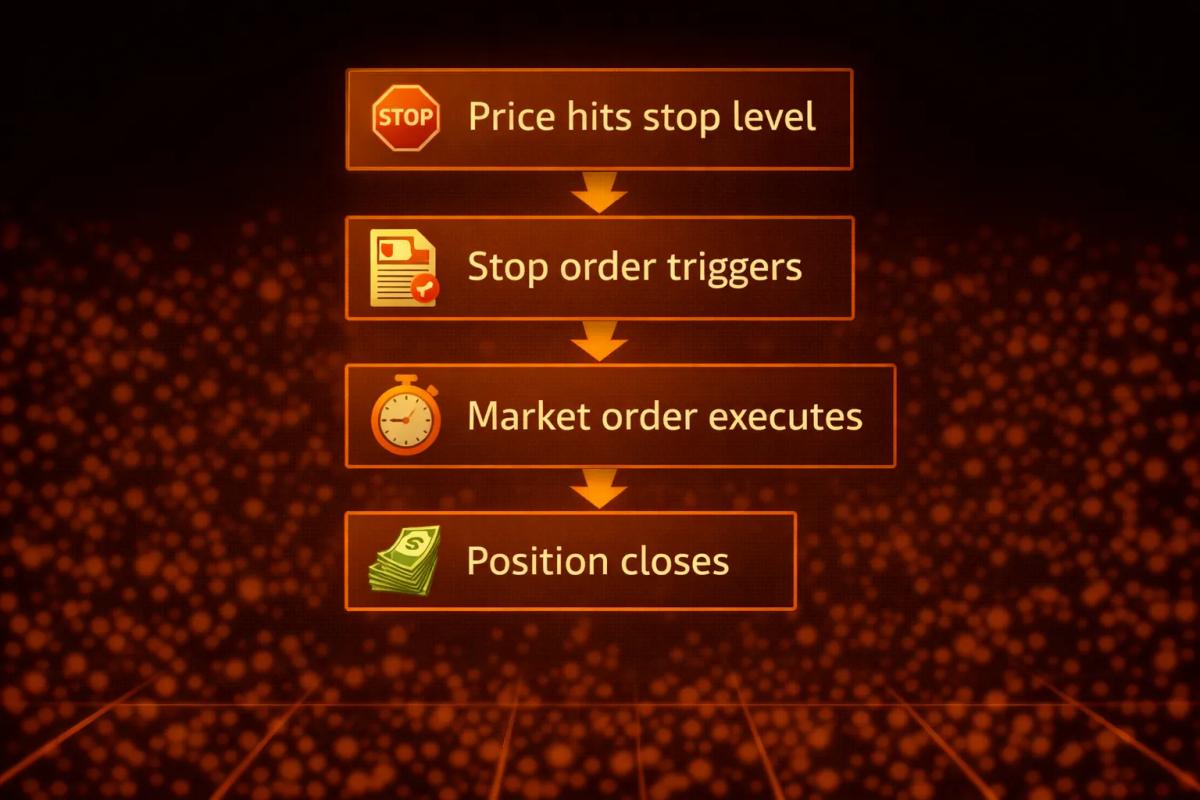
Once triggered, a standard stop loss converts into a market order, meaning it fills at the best available price. This ensures the position closes, though the actual execution price may differ slightly from the stop price: a phenomenon called slippage. Slippage tends to be more pronounced during high volatility or thin liquidity.
Stop Loss vs. Stop Limit Orders
These two order types are related but behave differently after triggering.
- Stop loss order: Once the stop price is reached, the order becomes a market order and fills at the next available price. Execution is prioritized over price precision.
- Stop limit order: Once the stop price is reached, the order becomes a limit order rather than a market order. It will only fill at the limit price or better. This provides price control but introduces the risk of no fill at all if the market moves too quickly past your limit.
For traders focused on exiting losing positions, the standard stop loss is typically preferred because it ensures closure. Stop limit orders can leave you stuck in a position if the market gaps through your limit price.
Prop firms test exactly this discipline: compare the best prop firms.
Why Traders Use Stop Loss Orders
Stop loss orders serve two functions: protecting capital and supporting disciplined decision-making.
Capital Preservation
The most direct benefit is capping what you can lose on any single trade. Without a stop loss, a position can keep moving against you until you manually intervene, or until the losses become severe enough to force closure.
When you define your maximum acceptable loss before entering, you can size positions appropriately and ensure no single trade causes catastrophic damage. This principle is central to sound trading risk management.
It’s worth noting that stop losses do not guarantee you’ll exit at your exact stop price. In fast markets or when gaps occur (overnight, over weekends), the execution price may be worse than anticipated. Stop losses reduce risk; they don’t eliminate it.
Emotional Discipline
Decisions made under emotional pressure tend to be poor decisions. When a position moves against you, the temptation to hold on and hope for a reversal can be overwhelming. This hope-based approach frequently produces larger losses than originally planned.
A stop loss removes the decision from your hands precisely when emotions are most likely to interfere. Committing to an exit point allows you to protect yourself from making irrational choices under stress.
How to Place a Stop Loss Order
Placing a stop loss involves more than picking a number. Effective placement requires considering market structure, volatility, and your overall trading plan.
Key Factors in Stop Loss Placement
Several factors should inform where you place your stop:
- Market structure: Support and resistance levels, recent swing highs and lows, and chart patterns provide context for where price may reverse or continue.
- Volatility: Markets with higher volatility need wider stops to avoid getting triggered by normal price fluctuations. Calmer markets may allow tighter stops.
- Position size: Stop loss distance directly affects capital at risk. Many traders work backward from a maximum acceptable loss to determine both stop distance and position size.
- Risk-reward ratio: Consider stop distance alongside your target profit. A trade with a wide stop and a narrow target may not offer favorable risk-reward characteristics.
- Time frame: Longer-term trades typically need wider stops than short-term trades because price fluctuations over days or weeks naturally exceed fluctuations over minutes or hours.
Common Stop Loss Placement Methods
Traders use several approaches to determine stop levels. No single method works best in all situations; the right approach depends on your trading style, market conditions, and the specific setup.
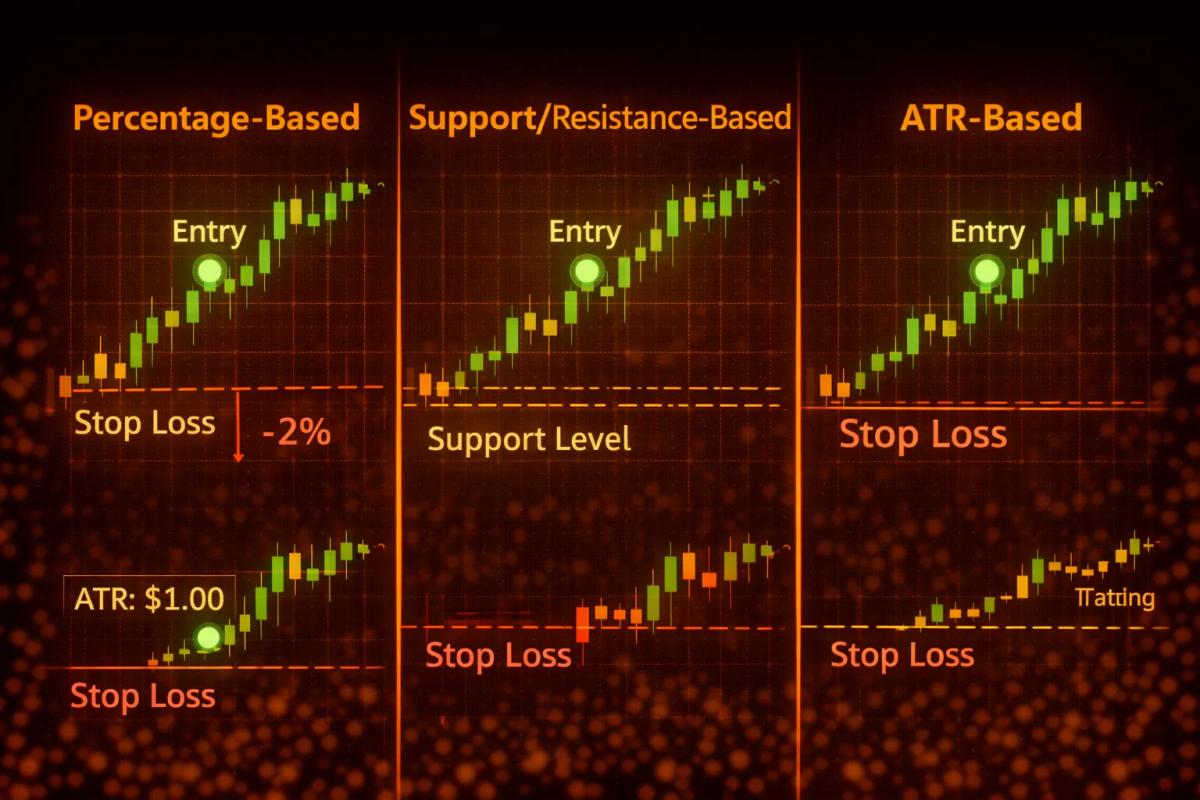
Percentage-based stops: Place the stop a fixed percentage from entry. A 2% stop on a $100 entry sits at $98 for a long position. Simple to apply, but blind to market structure and volatility.
Support and resistance-based stops: Place stops just beyond significant support (for longs) or resistance (for shorts). The logic: if price breaks through these levels, the trade thesis is probably wrong. This respects market structure but requires accurate identification of relevant levels.
ATR-based stops: The Average True Range measures volatility. ATR-based stops sit a multiple of the ATR away from entry (1.5x or 2x ATR, for example). This method automatically adjusts for volatility conditions: wider stops in volatile markets, tighter stops in calm ones.
Swing-based stops: For longs, place the stop below the most recent swing low. For shorts, above the most recent swing high. This uses price action structure to define where your thesis breaks down.
Stop Loss Mistakes to Avoid
Even traders who understand the importance of stop losses can stumble in how they apply them. Two mistakes are especially common.
Placing Stops Too Tight
A stop too close to your entry will get triggered by normal market noise: random fluctuations that don’t represent a meaningful directional change. This may result in getting stopped out of trades that would have eventually worked.
The desire to minimize loss is understandable, but overly tight stops often produce a pattern of small losses that accumulate into real damage. Worse, this can erode confidence and lead traders to abandon stop losses altogether.
To avoid this, place your stop at a level representing genuine invalidation of your trade idea, not just minor price movement. Volatility-based methods like ATR help calibrate appropriate distance.
Moving Stops Against the Trade
Moving a stop loss further from entry to avoid getting stopped out is one of the most damaging habits a trader can develop. This transforms a small, planned loss into a large, unplanned one.
The reasoning is usually emotional: the trader doesn’t want to accept the loss and convinces themselves the market will turn around. But this defeats the entire purpose of a stop loss, which is enforcing discipline when emotions push toward poor decisions.
If your stop is about to be hit, let it execute. If you frequently want to move stops further out, this may signal a problem with your initial placement method or position sizing rather than with the stops themselves.
Stop Loss Orders in Different Market Conditions
Stop loss effectiveness varies with market conditions. Understanding these variations helps set realistic expectations.
Volatile Markets
During high volatility, prices move rapidly and unpredictably. This creates specific challenges:
- Slippage may be more pronounced, meaning execution price could differ significantly from your stop price.
- Stops may trigger after short-term spikes that quickly reverse, stopping you out just before the market moves your way.
In volatile conditions, wider stops are generally necessary to avoid getting stopped by noise. Traders may also reduce position sizes to compensate for wider stops, keeping risk per trade consistent.
Low Liquidity Environments
In markets or instruments with thin liquidity, the spread between bid and ask prices widens, and there may not be enough buyers or sellers at every price level. This can result in:
- Larger slippage when stop orders execute
- Price gaps where the market jumps between levels without trading at prices in between
Traders in low liquidity environments should recognize that stops may not execute at expected prices and factor this uncertainty into risk calculations.
Stop Loss Orders Compared to Take Profit and Trailing Stops
Stop loss orders are one of several order types for managing open positions. Understanding how they relate to others provides useful context.
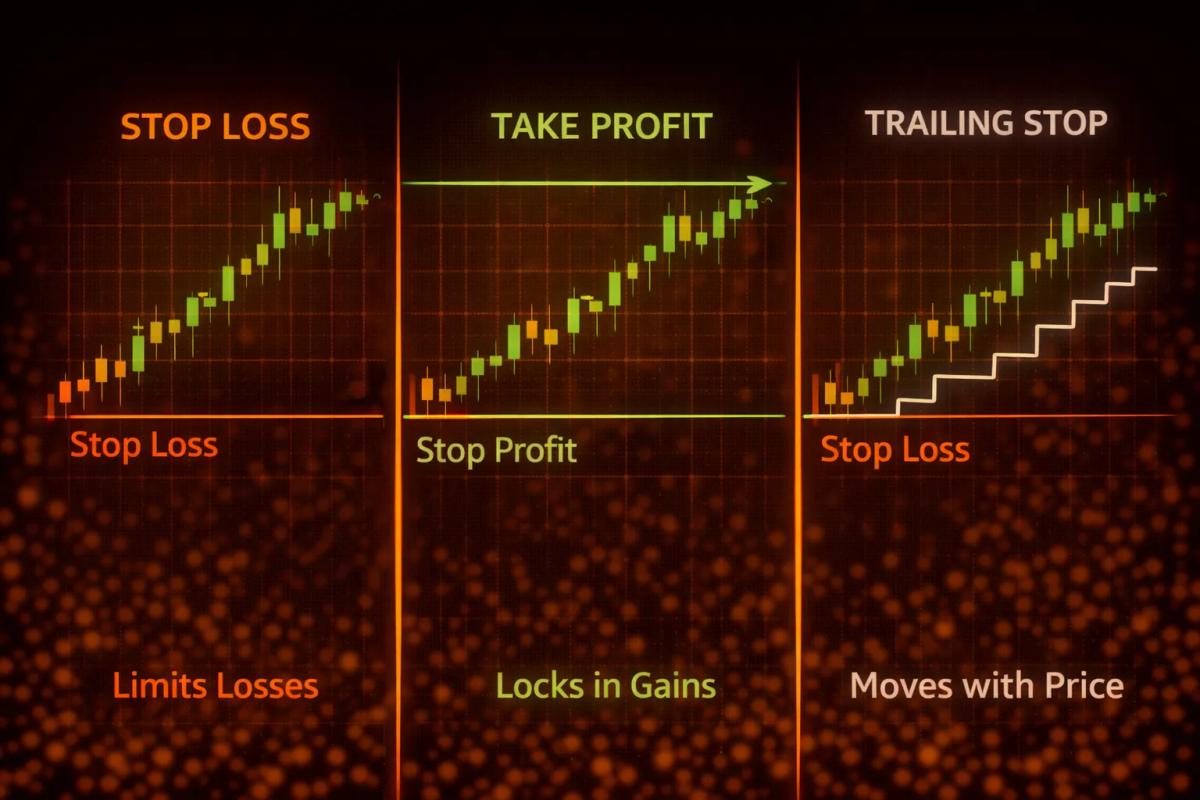
A stop loss defines where you exit if the trade goes wrong. A take profit order defines where you exit if it goes right. Together, these bracket your trade with predefined exit points on both sides.
A trailing stop is a dynamic stop loss that moves with price as it moves in your favor but doesn’t move backward if price reverses. This protects accumulated profits while letting winners run. Trailing stops are covered in depth in a separate guide.
Frequently Asked Questions
Does a stop loss guarantee I will exit at my stop price?
No. A standard stop loss becomes a market order when triggered and fills at the best available price. In fast markets or during gaps, execution price may differ from your stop price. This difference is called slippage.
Where should I place my stop loss?
No single correct answer exists. Effective placement depends on market structure, volatility, your risk tolerance, and your trading strategy. Common methods include placing stops below support levels, using a fixed percentage, or using a multiple of the Average True Range.
Should I always use a stop loss?
Most traders benefit from using stop losses, particularly those still developing their discipline and risk management skills. Some advanced traders use alternative approaches, but for most participants, stop losses provide valuable protection against large unexpected losses.
Can I move my stop loss after placing it?
Yes, you can modify your stop loss anytime before it triggers. Moving a stop closer to entry or into profit (locking in gains) is generally sound practice. Moving a stop further away to avoid being stopped out is widely considered a harmful habit that increases risk.
What is the difference between a stop loss and a stop limit order?
A stop loss order becomes a market order when triggered and fills at the next available price. A stop limit order becomes a limit order when triggered and only fills at the specified limit price or better. Stop loss orders prioritize execution certainty; stop limit orders prioritize price precision but may not fill in fast markets.
About the authors


Related articles
Cognitive Bias in Trading: How Mental Blind Spots Hurt Your Results
Learn how cognitive biases like confirmation bias and loss aversion affect your trading decisions. Discover practical techniques to recognize and overcome them.
Common Trading Mistakes and How to Avoid Them
Learn the most common trading mistakes that cost beginners money. Discover how to identify and avoid these errors to protect your capital and improve results.
Hedging Strategies in Trading: How to Protect Positions
Learn how hedging strategies help traders manage risk. Explore options, pairs trading, and diversification techniques with practical guidance.
0 comments