


Entering a trade is only half the equation. Knowing when to exit matters just as much. A take profit order is one of the simplest tools for defining that exit point ahead of time. This guide covers what take profit orders are, how they work, and how to use them within a disciplined trading approach.
What Is a Take Profit Order?
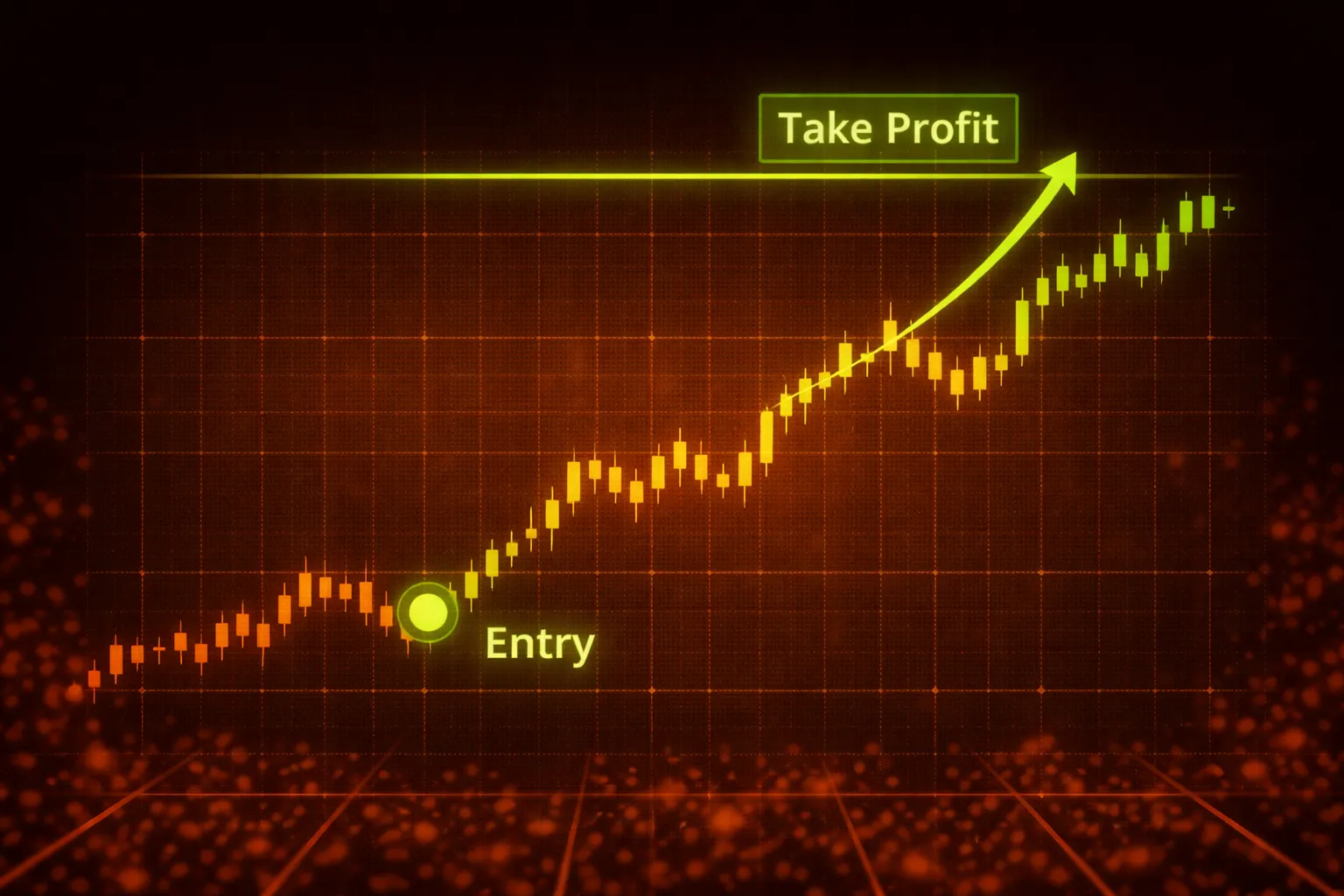
A take profit order instructs your broker or platform to close a position automatically once it reaches a specified profit level. Instead of monitoring the market and closing manually, the order executes on your behalf the moment price hits your target.
How Take Profit Orders Work
The mechanics are simple. When you open a position, you designate a take profit level: above your entry for a long trade, below it for a short. If the market reaches that level, the platform closes your position at a profit without any further input from you.
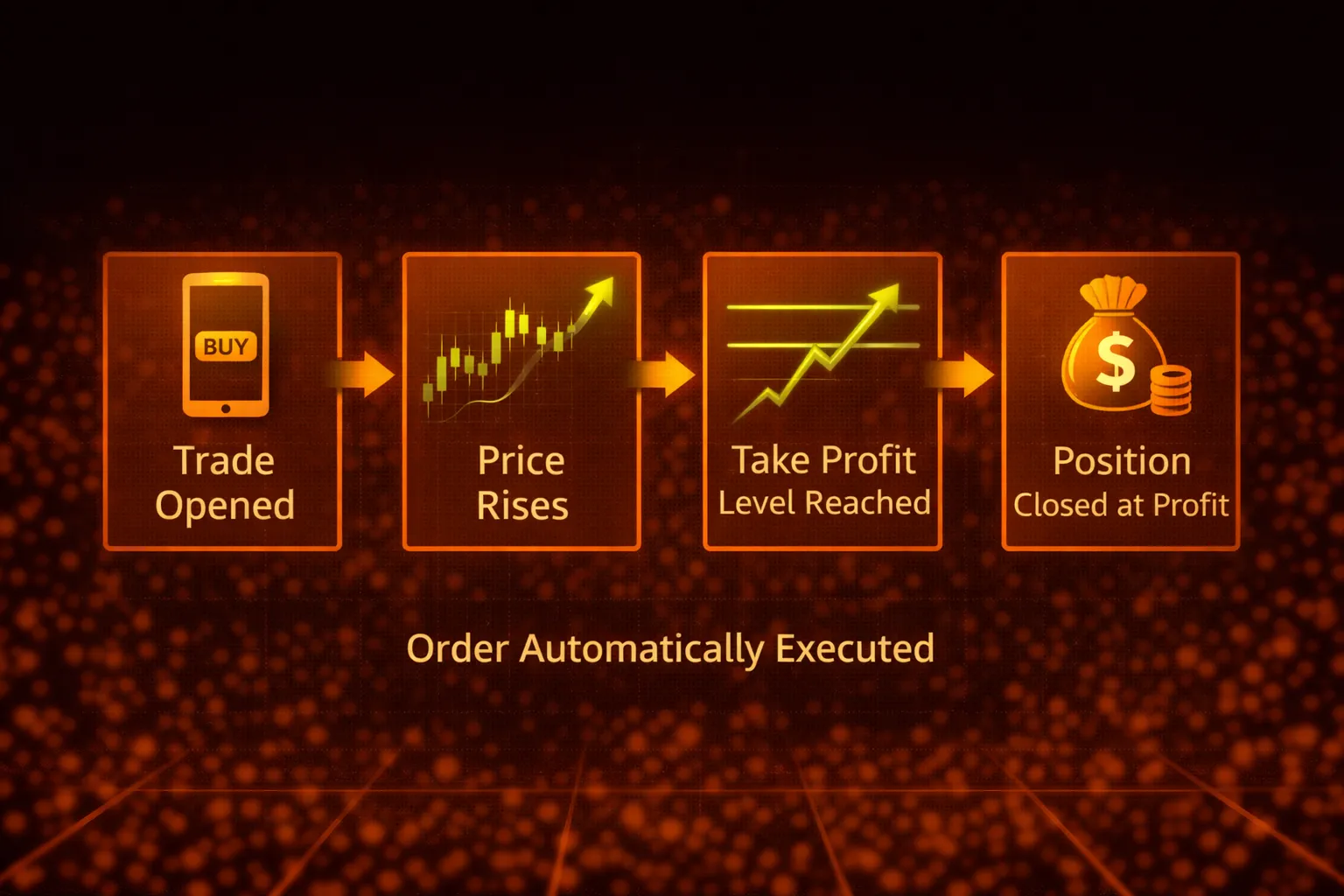
Say you buy an asset at $100 and set a take profit at $110. When the price touches $110, your position closes. You don’t need to be watching.
The order stays pending until one of three outcomes occurs: price reaches your target and the order fills, you cancel the order, or you close the position manually before the target is hit.
Take Profit vs. Market Orders vs. Limit Orders
Understanding how take profit orders fit alongside other order types clarifies their purpose:
- Market orders execute immediately at the best available price. They’re for entering or exiting right now, regardless of the exact fill.
- Limit orders specify a price you’re willing to buy or sell at. Execution only occurs if the market reaches that price.
- Take profit orders function as limit orders designed specifically to close an existing position at a favorable price, securing gains when your target is reached.
The key difference: take profit orders are conditional. They wait for the market to come to you.
Why Traders Use Take Profit Orders
Take profit orders serves both practical and psychological functions. They impose structure on exits and reduce the decision-making burden once a trade is live.
Removing Emotion from Exit Decisions
Knowing when to close a winning position is genuinely difficult. Without a predefined target, traders often fall into familiar traps:
- Closing too early, fearing profits will vanish
- Holding too long, hoping for more, only to watch gains disappear
- Reacting impulsively to short-term price swings
A take profit order sidesteps these pressures. You define your exit logic beforehand; the order handles the rest.
Locking in Gains Automatically
Markets move fast, and favorable prices can be fleeting. A take profit order guarantees that if price touches your target (even briefly) your position closes and your profit is captured. This matters especially when you can’t watch your trades around the clock.
How to Set a Take Profit Order
Placing a take profit order is mechanically straightforward on most platforms. Choosing where to place it requires more thought. Your target should reflect both your analysis and a realistic view of how the market tends to behave.
Choosing a Profit Target
No single formula applies universally, but several methods are widely used:
- Technical levels: Many traders set take profits near support and resistance zones, previous highs or lows, or other chart-based reference points where price has historically stalled or reversed.
- Risk-reward ratios: Some define targets as a multiple of their risk. Risking $50 with a 2:1 ratio, for example, means targeting $100 in potential profit.
- Percentage-based targets: A simpler approach based on setting a fixed percentage gain relative to your entry price.
Which method suits you depends on your trading style and the specific market situation.
Factors That Influence Target Placement
When deciding where to set your take profit, weigh these considerations:
- Volatility: In volatile markets, prices can overshoot or fall short of targets quickly. Wider targets may make sense, but they also mean longer waits and more uncertainty.
- Timeframe: Short-term traders often use tighter targets achievable within hours or days. Longer-term traders typically set targets further out.
- Market structure: Clear resistance levels or zones where price has previously turned often serve as logical places to take profit.
- Your risk parameters: Your take profit should make sense relative to your stop loss orders. Exit strategy works best when both sides are defined together.
Take Profit Orders in Different Market Conditions
How well a take profit order performs depends partly on market behavior. A fixed target behaves differently in a trending environment than in a choppy, range-bound one.
Trending Markets
In a strong trend, prices can move directionally for extended stretches. Take profit orders in these conditions may:
- Get hit relatively quickly as momentum carries price toward the target
- Leave gains on the table if the trend continues well past your exit
- Offer certainty and remove the temptation to hold indefinitely
Traders in bull or bear markets often face a tradeoff: capturing a defined profit versus giving the trend room to run further.
Range-Bound Markets
When prices oscillate between established support and resistance, take profits orders placed near the range edges can work well. In these conditions:
- Targets near resistance for longs (or support for shorts) align with natural reversal points
- Prices may approach targets repeatedly, creating consistent opportunities
- Breakouts can invalidate the range, so staying aware of context matters
Common Mistakes When Using Take Profit Orders
Even a straightforward tool can be misapplied. Recognizing common errors helps traders use take profit orders more effectively.
Setting Targets Too Close or Too Far
- Too close: If your take profit sits too near your entry, normal market noise may trigger it before a meaningful move develops. You end up collecting small wins while missing larger opportunities.
- Too far: Unrealistic targets rarely get hit. Price might move favorably, then reverse, leaving you with a loss or a missed chance to lock in gains.
Striking the right balance requires understanding typical price behavior for the asset and timeframe you’re trading.
Ignoring Market Context
A take profit level that made sense at entry may become less relevant if conditions shift. News events, volatility changes, or evolving trend structure can all affect whether a target remains appropriate.
Take profit orders are meant to automate exits, but they’re not permanent fixtures. Reviewing them periodically (especially on longer-duration trades) helps ensure they still align with current reality.
Take Profit Orders vs. Trailing Stops
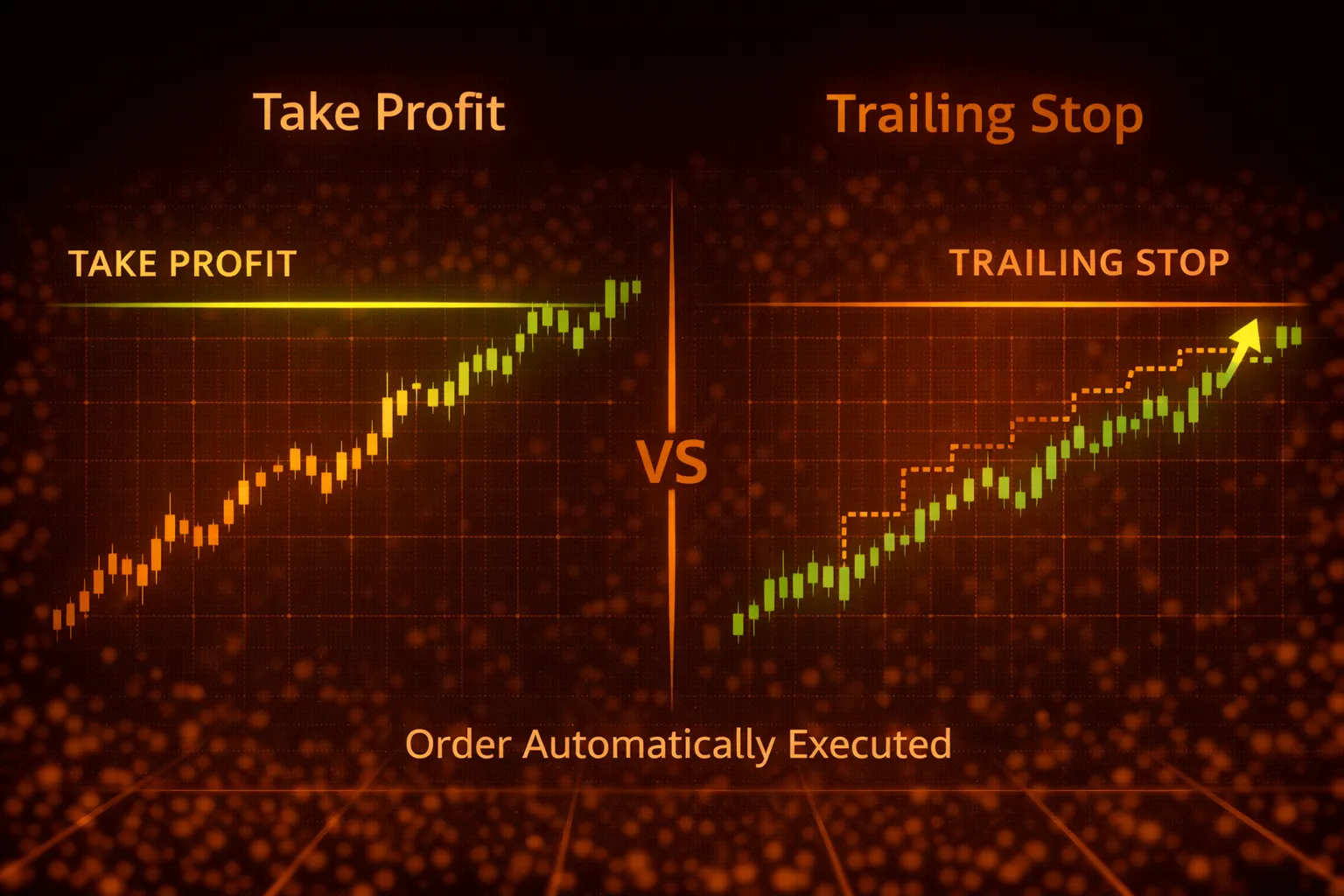
Both take profit orders and trailing stops are exit tools, but they operate differently.
Feature | Take Profit Order | Trailing Stop |
Target type | Fixed price level | Dynamic, moves with price |
Execution | Triggers at specific price | Triggers when price reverses by set amount |
Behavior in trends | Exits at predetermined point | Follows favorable movement, exits on pullback |
Best suited for | Defined targets, range trading | Capturing trend continuation |
A take profit order locks in gains at a level you select in advance. A trailing stop adjusts as price moves favorably, triggering only when price reverses by a specified distance. Each has advantages depending on market conditions and your objectives.
Frequently Asked Questions


Comments