


Trading Discipline: Why It Matters and How to Build It
Most traders pour hours into finding the perfect strategy, the right indicators, or ideal market conditions. Yet those who achieve consistent results over time often point to something far less glamorous: discipline. Trading discipline is the ability to follow your plan, manage your emotions, and execute consistently, even when every instinct urges you to do otherwise.
This guide explains what trading discipline means, why it matters more than the strategy you choose, and how to develop it systematically through practical habits and tools.
Disclaimer: This content is for educational and informational purposes only and does not constitute financial advice. Trading involves risk, and readers should consult qualified professionals for personalized guidance.

What Is Trading Discipline?
Definition and Core Components
Trading discipline is the consistent application of predefined rules when making trading decisions. It means executing your trading plan as written, regardless of how you feel, what the market appears to be doing, or what other traders are saying.
The core components include:
- Rule adherence: Following entry, exit, and position sizing rules without deviation
- Emotional regulation: Recognizing emotional states and preventing them from driving decisions
- Patience: Waiting for valid setups rather than forcing trades
- Consistency: Applying the same process to every trade, win or lose
- Accountability: Reviewing performance honestly and adjusting behavior accordingly
Discipline is a framework that protects you from your own worst impulses precisely when those impulses are strongest.
How Discipline Differs from Strategy Knowledge
Knowing what to do and actually doing it are not the same thing. Strategy knowledge means understanding when to enter, where to place stops, and how to manage a position. Discipline means executing that knowledge consistently under real market conditions.
A trader can have a profitable strategy on paper and still lose money. They might enter too early out of fear of missing the move. They might shift their stop-loss to avoid a small loss, only to absorb a larger one. They might take profits too quickly because sitting with an open position feels unbearable.
Strategy tells you what to do. Discipline ensures you do it.
Prop firms test exactly this discipline: compare the best prop firms.
Why Trading Discipline Determines Success
The Role of Consistency in Trading Results
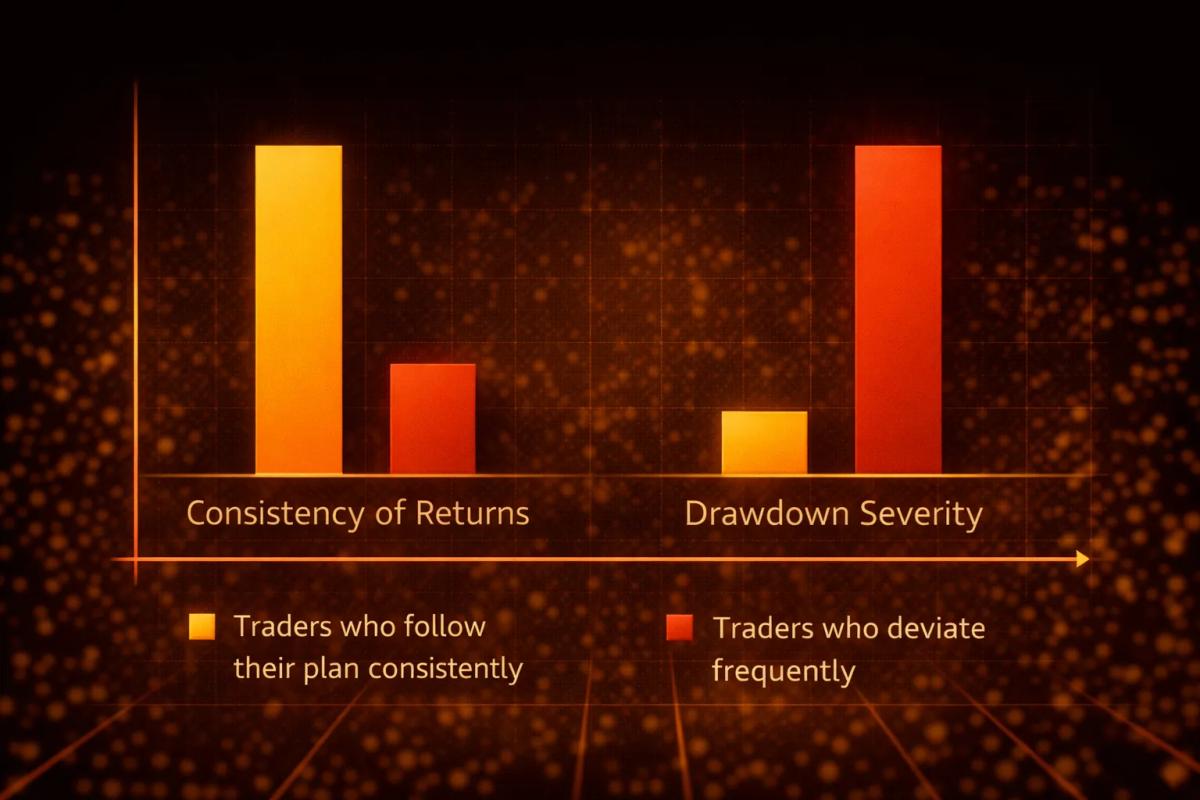
Trading outcomes are probabilistic. Even a strategy with a genuine edge produces losing trades, sometimes several in a row. That edge only materializes over a large sample of consistently executed trades.
When a trader deviates from their plan (skipping trades, adjusting position sizes on gut feeling, or changing exit rules mid-trade) they corrupt the sample. The strategy’s statistical edge becomes meaningless because it is no longer being applied consistently.
Consistency means accepting that individual trade outcomes are largely outside your control, while the process is entirely within it. Disciplined traders focus on executing correctly and let probabilities work over time.
How Emotional Decisions Erode Capital
Emotions are not inherently destructive, but they become so when they override rational decision-making. Fear and greed get most of the attention, though subtler emotions (boredom, frustration, overconfidence) cause significant damage too.
Fear might cause a trader to exit a winning position too early, missing most of the move. It might prevent them from taking a valid setup after a string of losses. Greed might push them to increase position size after a winning streak, exposing them to catastrophic loss when that streak ends.
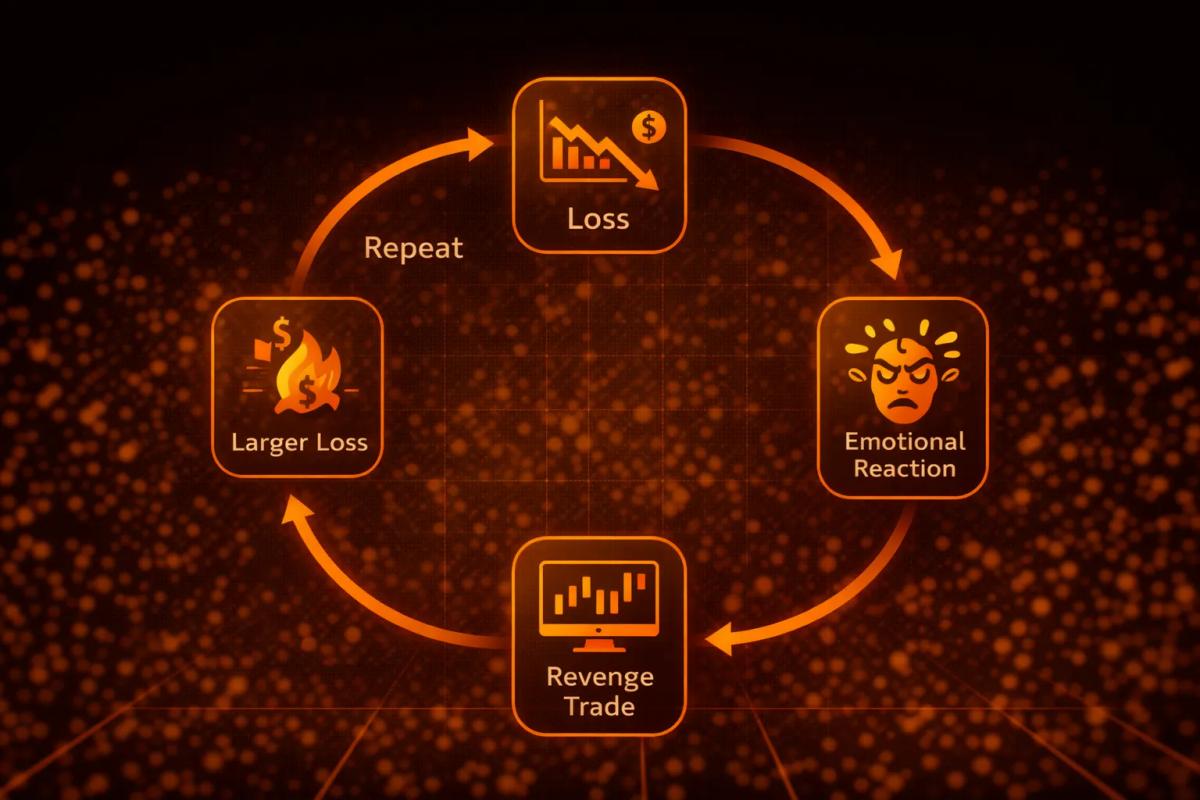
Emotional decisions tend to compound. A fear-driven early exit breeds frustration. Frustration leads to an impulsive entry to “make it back.” That trade fails, deepening frustration or despair. The cycle continues until discipline is restored or capital is gone.
Data: What Separates Profitable Traders from the Rest
Research on retail trading behavior consistently shows that most traders lose money over time. Specific figures vary by study and market, but the pattern holds: most participants do not achieve consistent profitability.
What distinguishes the minority who succeed? Studies and surveys of professional and consistently profitable traders reveal common traits:
- They trade with predefined rules rather than intuition
- They maintain detailed records of their trades
- They limit losses through strict risk management practices
- They review their performance regularly and adjust their process
The specific strategy matters less than how consistently it is applied. Traders using different approaches (trend following, mean reversion, breakouts) can all achieve profitability with disciplined execution.
Common Discipline Failures and Their Causes
Overtrading and Revenge Trading
Overtrading happens when a trader takes more positions than their plan allows. It often stems from boredom, a need for action, or the assumption that more trades mean more profits. Each additional trade introduces transaction costs and increases exposure to market noise rather than genuine opportunities.
Revenge trading is overtrading triggered by a loss. The trader feels compelled to “win it back” immediately, abandoning their criteria for valid setups. This behavior typically magnifies losses because decisions are coming from an emotional state rather than a rational one.
Ignoring Stop-Losses
A stop-loss is a predetermined exit point that limits loss on a trade. Ignoring or moving it is among the most common and damaging discipline failures.
Traders ignore stops because taking a loss hurts. Moving the stop “just a little” postpones that pain. But this transforms small, manageable losses into large, account-damaging ones. A trader who routinely moves stops has effectively abandoned risk management altogether.
Abandoning Your Trading Plan Mid-Trade
Markets move quickly, and the temptation to react to new information runs strong. A trader might enter according to plan, then exit early because price action looks “weak,” or hold longer than planned because the move seems to have room to run.
These mid-trade adjustments occasionally work out, which reinforces the behavior. Over time, though, they undermine the trader’s ability to evaluate their strategy. If you never follow the plan completely, you cannot know whether the plan works.
How to Develop and Maintain Trading Discipline
Creating a Rules-Based Trading Plan
Discipline requires something to be disciplined about. A vague intention to “buy low and sell high” provides no structure. A rules-based trading plan specifies exactly what conditions must be met before entering a trade, how position size is calculated, where the stop-loss goes, and how exits are managed.
Effective trading plan components include:
- Market and instrument selection: What you will trade and under what conditions
- Entry criteria: Specific, observable conditions that must all be present
- Position sizing rules: How much capital to risk per trade
- Stop-loss placement: Where and why, defined before entry
- Exit criteria: Profit targets, trailing stops, or time-based exits
- Conditions to avoid trading: Times, market states, or personal states that disqualify trading
The more specific the plan, the easier it is to follow. Ambiguity creates room for rationalization.
Building Pre-Trade and Post-Trade Routines
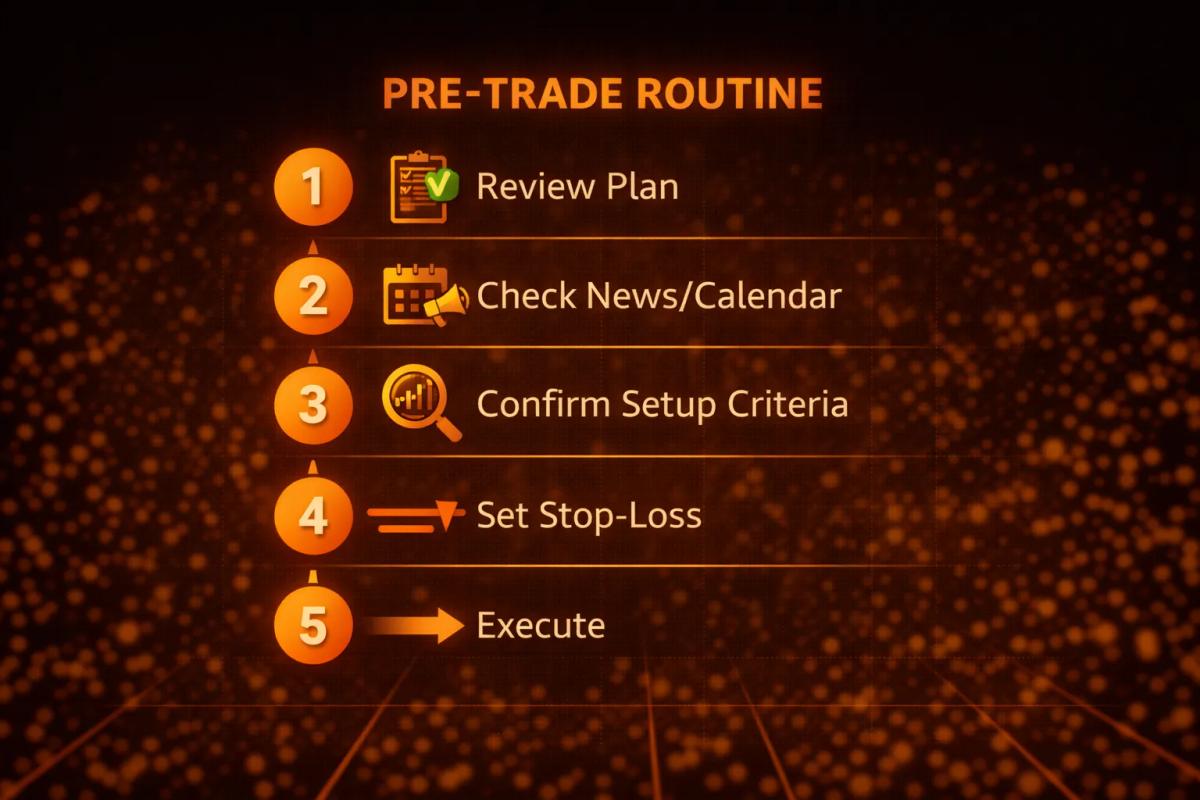
Routines create structure that supports discipline. A pre-trade routine ensures you are mentally prepared and that the trade meets all criteria before you commit capital. A post-trade routine captures lessons while details remain fresh.
Pre-trade routine:
- Review your trading plan and rules
- Check the economic calendar for scheduled events
- Assess your current mental and emotional state
- Confirm the setup meets all entry criteria
- Calculate position size and set stop-loss before entry
Post-trade routine:
- Record trade details in your journal immediately
- Note your emotional state during the trade
- Evaluate whether you followed your plan
- Identify what you would do differently
Routines work because they shift decision-making from the heat of the moment to calmer preparation and review phases.
Using a Trading Journal for Accountability
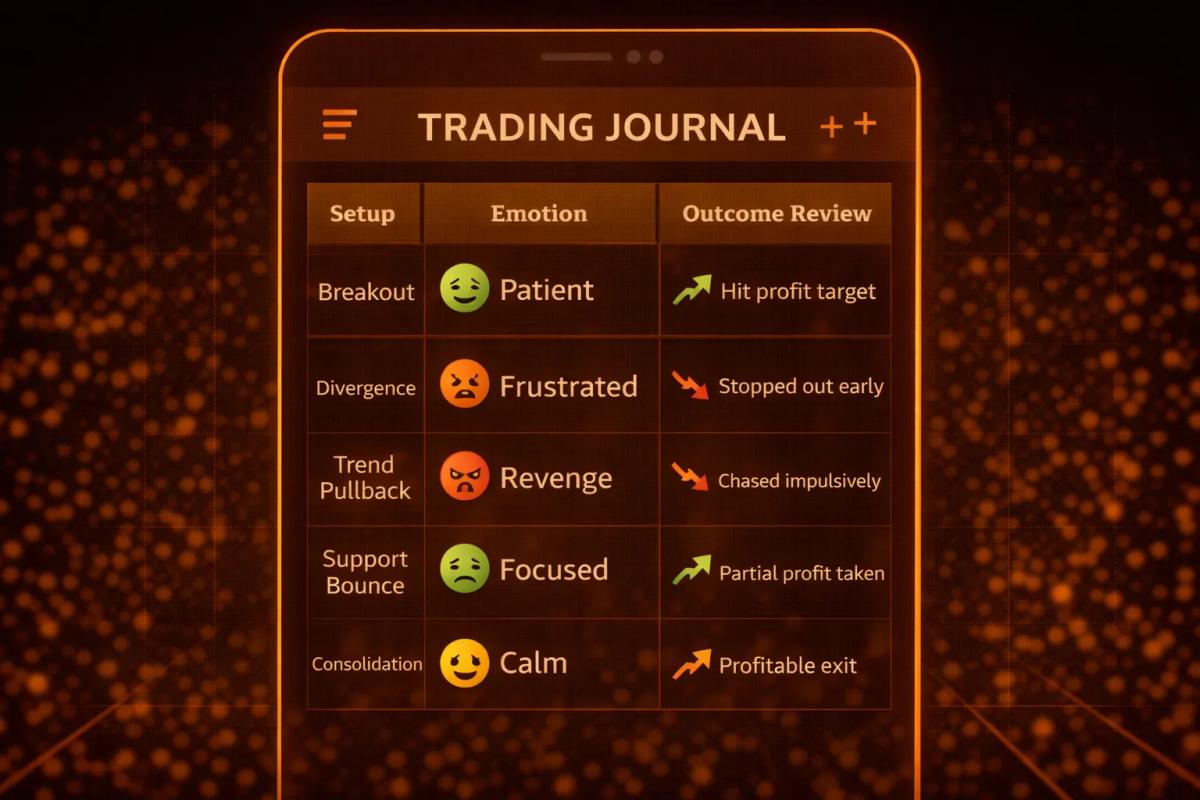
A trading journal is one of the most effective tools for building discipline. It creates a record of what you planned, what you did, and what happened as a result. Over time, patterns emerge that reveal where discipline breaks down.
Effective journal entries include:
- Date, time, and instrument
- Entry and exit prices
- Position size and risk amount
- The setup or reason for the trade
- Whether you followed your plan (yes or no, with notes)
- Your emotional state before, during, and after
- Outcome (profit or loss)
- Lessons or observations
Reviewing your journal weekly or monthly reveals whether losses come from strategy failure or discipline failure. Most traders find that their worst losses trace back to broken rules.
Managing External Factors (Sleep, Stress, Environment)
Discipline does not exist in isolation. Sleep deprivation, high stress, illness, and chaotic environments all reduce your capacity for self-control. Trading when compromised is itself a discipline failure.
Factors that affect discipline capacity:
- Sleep: Even moderate sleep deprivation impairs judgment and emotional regulation
- Stress: External life stress reduces the cognitive bandwidth available for trading decisions
- Physical health: Illness, hunger, and fatigue compromise decision quality
- Environment: Distractions, noise, and interruptions make focused execution difficult
Many disciplined traders include personal state checks in their pre-trade routine. If they are tired, stressed, or unwell, they reduce position sizes or skip trading entirely. Protecting capital includes protecting yourself.
Tools and Techniques for Disciplined Trading
Checklists and Automation
Checklists eliminate the need to remember rules in the moment. A simple checklist reviewed before each trade ensures no criteria get skipped. Airline pilots use checklists before every flight despite thousands of hours of experience. The same principle applies to trading.
Automation takes this further by removing human discretion from parts of the process. Automated stop-losses ensure exits happen as planned regardless of emotional state. Position size calculators remove the temptation to “go bigger” on a trade that feels certain. Alert systems can replace constant screen-watching, reducing fatigue and impulsive reactions.
Position Sizing as a Discipline Mechanism
Proper position sizing (risking a consistent, small percentage of capital per trade) functions as both risk management and a discipline mechanism. When position sizes are small relative to your account, individual losses remain manageable. This lowers the emotional intensity of each trade, making discipline easier to maintain.
Oversized positions create the opposite effect. The stakes feel too high, leading to premature exits, moved stops, and panic decisions.
Standard approaches include risking 1–2% of account capital per trade, though the appropriate percentage depends on strategy, trading frequency, and personal risk tolerance.
Scheduled Breaks and Session Limits
Markets are available nearly around the clock for many instruments, but human attention is finite. Trading without breaks leads to fatigue, diminished judgment, and heightened emotional reactivity.
Scheduled breaks and session limits include:
- Fixed trading hours with defined start and end times
- Mandatory breaks after a set number of trades
- Daily loss limits that trigger an automatic stop for the day
- Rules for stepping away after winning or losing streaks
These limits might seem arbitrary, but they guard against the gradual erosion of discipline that occurs during extended sessions.
When Discipline Breaks Down: Recovery Strategies
Recognizing Tilt and Emotional Compromise
“Tilt” is a term borrowed from poker describing a state of emotional compromise where decision quality deteriorates. A tilted trader might feel angry, desperate, numb, or reckless. The specific emotion matters less than the impact: they are no longer capable of disciplined execution.
Signs of tilt include:
- Ignoring or rationalizing rule violations
- Feeling a strong urge to act immediately
- Focusing on recent losses rather than the current opportunity
- Abandoning risk management practices
- A sense that you “need” to make something happen
Recognizing tilt is the first step. Many traders benefit from a personal checklist of warning signs specific to their own patterns.
Steps to Reset After a Discipline Failure
Discipline failures happen to everyone. The goal is rapid recognition and recovery. A single broken rule does not have to become a cascade.
Steps to reset after a discipline failure:
- Stop trading immediately. Close your platform if necessary. The priority is preventing further damage.
- Acknowledge what happened. Write down exactly what rule you broke and why. Be honest.
- Identify the trigger. What emotional state, external event, or thought preceded the failure?
- Take a break. Step away from screens for at least a few hours, ideally until the next session.
- Review your plan. Before returning, re-read your rules and remind yourself why they exist.
- Start small. When you resume, consider reducing position size until you rebuild confidence in your execution.
Recovery is not about self-punishment. Shame and guilt tend to worsen discipline rather than improve it. The objective is understanding and prevention.
Key Takeaways
Trading discipline is the ability to follow your rules consistently, manage your emotions, and execute your plan regardless of short-term outcomes. It is a skill developed through deliberate practice and proper structure.
- Discipline matters more than strategy selection because even a profitable strategy fails when applied inconsistently
- Emotional decisions compound over time, turning small losses into account-damaging drawdowns
- Common discipline failures include overtrading, revenge trading, ignoring stops, and abandoning plans mid-trade
- A rules-based trading plan with specific criteria provides the foundation for disciplined execution
- Pre-trade and post-trade routines shift decisions away from emotional moments to calmer phases
- A trading journal creates accountability and reveals patterns in discipline failures
- External factors like sleep, stress, and environment affect discipline capacity and deserve attention
- Tools like checklists, automation, proper position sizing, and session limits support consistent execution
- When discipline breaks down, the priority is recognizing the state, stopping, and recovering
Building trading discipline is gradual work. Focus on small improvements over time, use tools and routines that support your goals, and treat failures as information rather than evidence of personal inadequacy. Consistency in process leads to consistency in results.

About the authors

Related articles

Cognitive Bias in Trading: How Mental Blind Spots Hurt Your Results
Learn how cognitive biases like confirmation bias and loss aversion affect your trading decisions. Discover practical techniques to recognize and overcome them.
Common Trading Mistakes and How to Avoid Them
Learn the most common trading mistakes that cost beginners money. Discover how to identify and avoid these errors to protect your capital and improve results.

Hedging Strategies in Trading: How to Protect Positions
Learn how hedging strategies help traders manage risk. Explore options, pairs trading, and diversification techniques with practical guidance.
0 comments